For a new batter, timing a moving ball is easier when the feed is gentle and predictable. A side-on feeder drops a soft ball for one bounce, allowing the batter to watch it closely and play a controlled straight shot towards a gate. If the batter swings before the bounce, have them say “bounce” as the ball lands and delay the stroke until they can see it rising. Keep the feed gentle and praise a balanced contact, not a long hit. Allow about 10 minutes for the station, including explanation, turns and rest.
Set up the drill
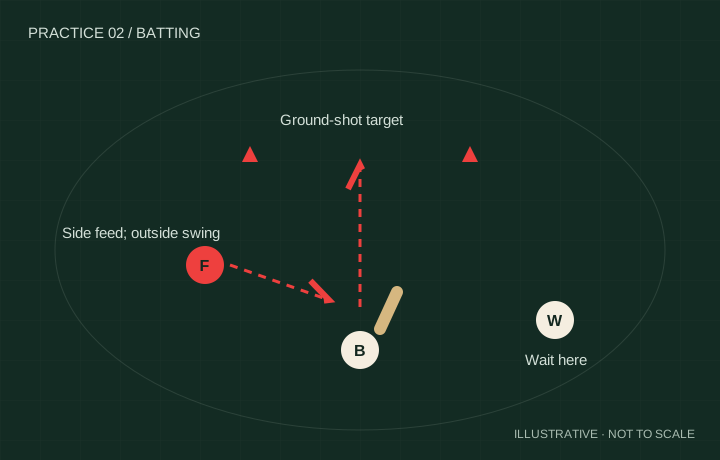
Mark a hitting lane and a target gate. A competent adult feeds from the side, outside the bat’s swing arc, with a soft ball.
Equipment: Bat, soft ball, 4 cones.
How to run it
- Rehearse one swing without a ball to check separation.
- The feeder drops the ball into a predictable bounce area.
- The batter watches the bounce and plays towards the gate.
- Stop between attempts so the feeder can reset safely.
- Swap the batter after five feeds.
Watch the bounce; keep the swing smooth.
A common mistake—and the fix
A rushed swing starts before the bounce. Slow the feed and ask the batter to wait for the ball to rise.
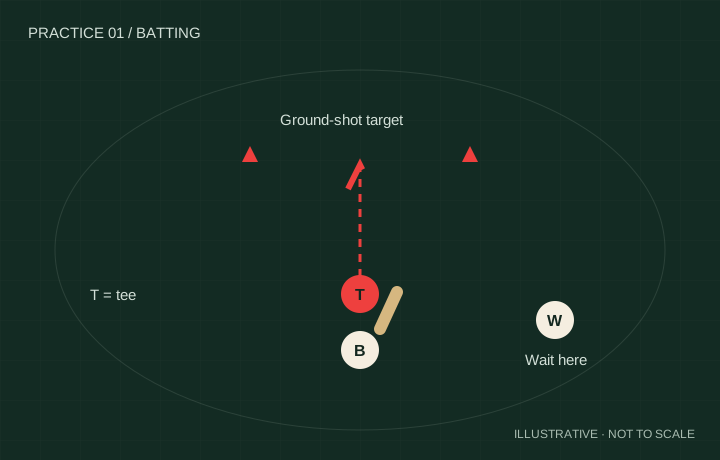
Return to a stationary tee or use a bigger ball with a slower bounce.
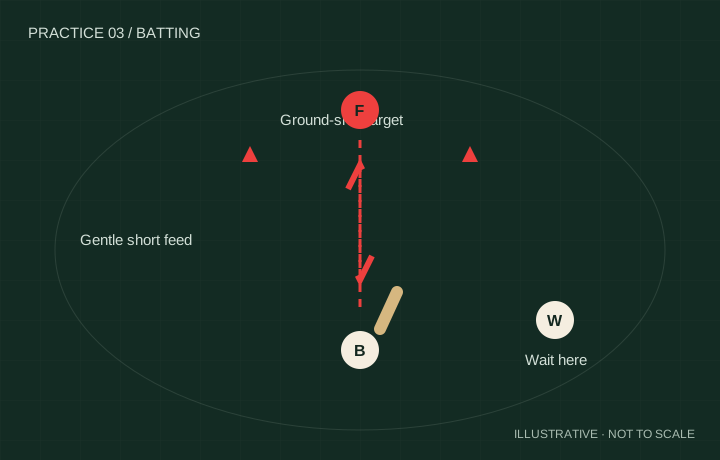
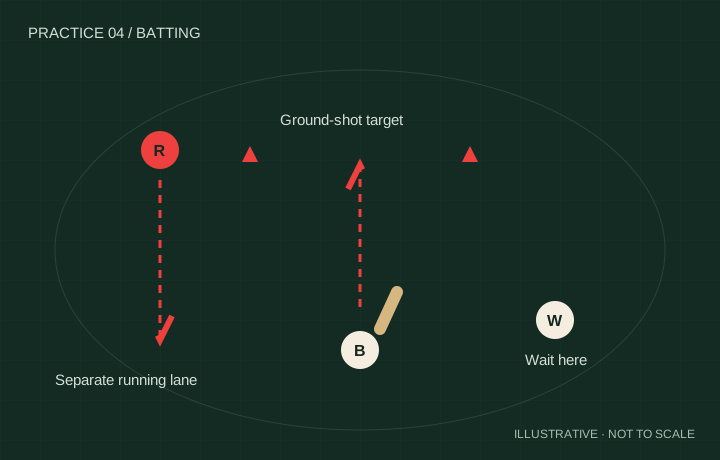
Vary the drop slightly within a safe, hittable area while preserving feeder separation.
What to measure
Record clean contacts out of five before counting target hits.
Use the first round as the player’s starting point. Keep distance, ball and target size the same when comparing another round. These counts are practice observations, not selection standards or promises of improvement.
Before you start
Never place a feeder in front of a live swing. Stop if the feeder cannot stay outside the swing and ball path.
Use a soft ball for the version described here. Explain the stop signal, check the surface and keep waiting players clear. Adapt or stop if a player feels pain, distress or fatigue. Read the full safety and supervision guide.
Questions about this drill
What does drop-feed contact help players practise?
The batter learns to watch a predictable bounce and bring the bat through the line of the ball. A calm, controlled contact is more useful than a hard hit during this first progression.
How can I adapt this drill for a less confident player?
Return to a stationary ball when timing becomes difficult. Move to a gentle single bounce only after the batter can make reliable contact.
What should I look for before increasing the challenge?
Look for the batter watching the ball onto the bat. If contact becomes rushed, return to a stationary feed.