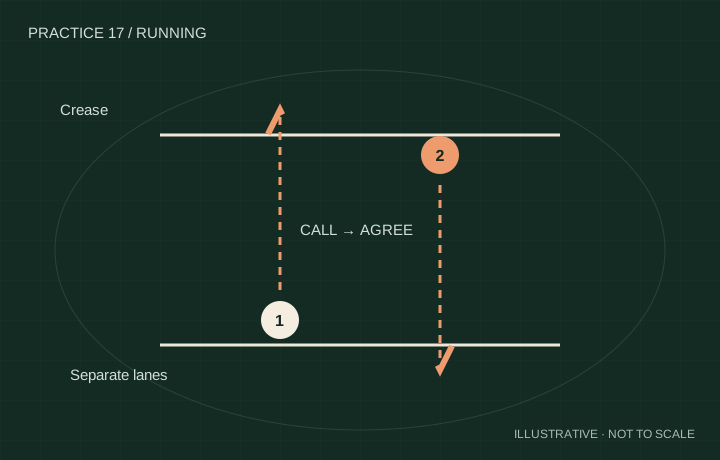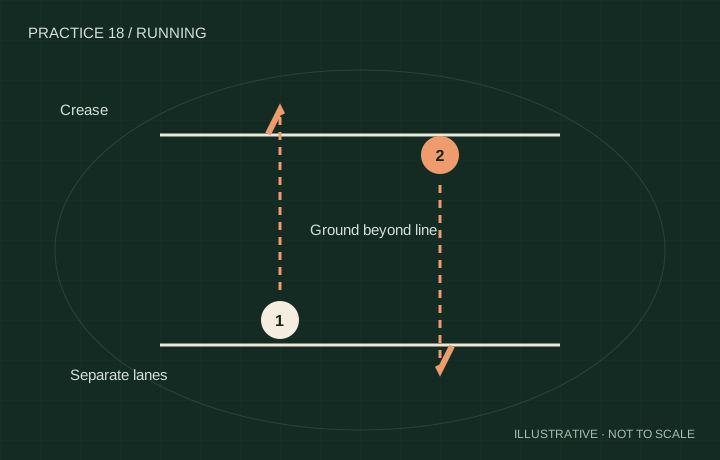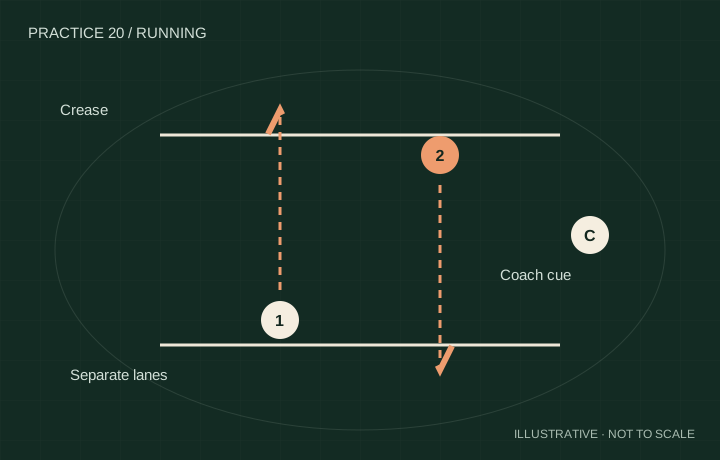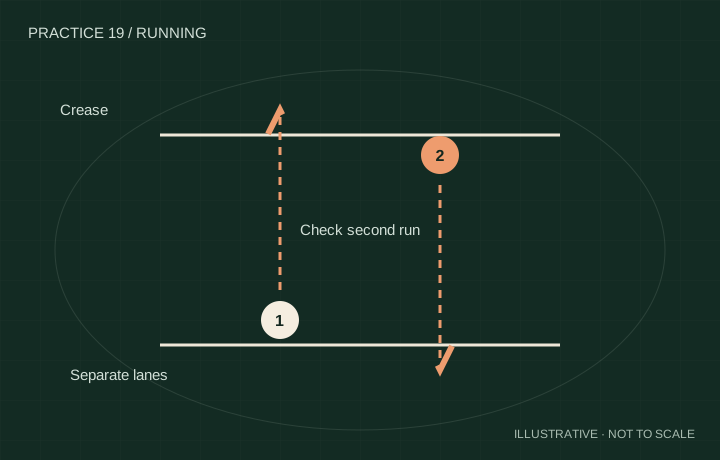
Deciding on a second run takes more than speed. Partners practise completing the first run, turning at the crease and communicating before they go again. Start slowly so each player can see the other and understand the call. If partners automatically set off for a second run, insert a deliberate “no” call after the first turn. Watch both players stop safely, then alternate the calls so the decision does not become predictable. Allow about 12 minutes for the station, including explanation, turns and rest.
Set up the drill
Set short creases and parallel running lanes. Partners start at opposite ends. Practise the route at walking pace first.
Equipment: Lightweight bats, cones.
How to run it
- Agree who calls in the practice scenario.
- Complete the first run under control.
- Ground the bat and look for the partner’s call.
- Run again only after a shared yes.
- Reset and swap the caller.
Complete one run before committing to the next.
A common mistake—and the fix
An automatic second run ignores communication. Add occasional no calls and reward a controlled stop.
Walk the full sequence without bats.
Add a coach-controlled fielding cue that changes the second-run decision.
What to measure
Count pairs completing both creases with an agreed second-run decision.
Use the first round as the player’s starting point. Keep distance, ball and target size the same when comparing another round. These counts are practice observations, not selection standards or promises of improvement.
Before you start
No live throws or contested run-outs. Allow recovery between efforts.
Use a soft ball for the version described here. Explain the stop signal, check the surface and keep waiting players clear. Adapt or stop if a player feels pain, distress or fatigue. Read the full safety and supervision guide.
Questions about this drill
What does two-run teamwork help players practise?
The pair practises finishing a first run, turning and deciding together whether a second is safe. Listen for an agreed call rather than assuming the second run will always happen.
How can I adapt this drill for a less confident player?
Walk the sequence without bats and stop after the first run. Add the second-run decision once the pair can turn and communicate calmly.
What should I look for before increasing the challenge?
Look for a finished first run, a controlled turn and a shared decision about the second. A safe no is a good outcome.