
The ICC Men's Cricket World Cup is changing, and the 2027 tournament will look very different from the one fans watched in India four years earlier. More teams, a new opening round and a fresh route to the semi-finals will make this one of the biggest changes to the 50-over competition in recent years.
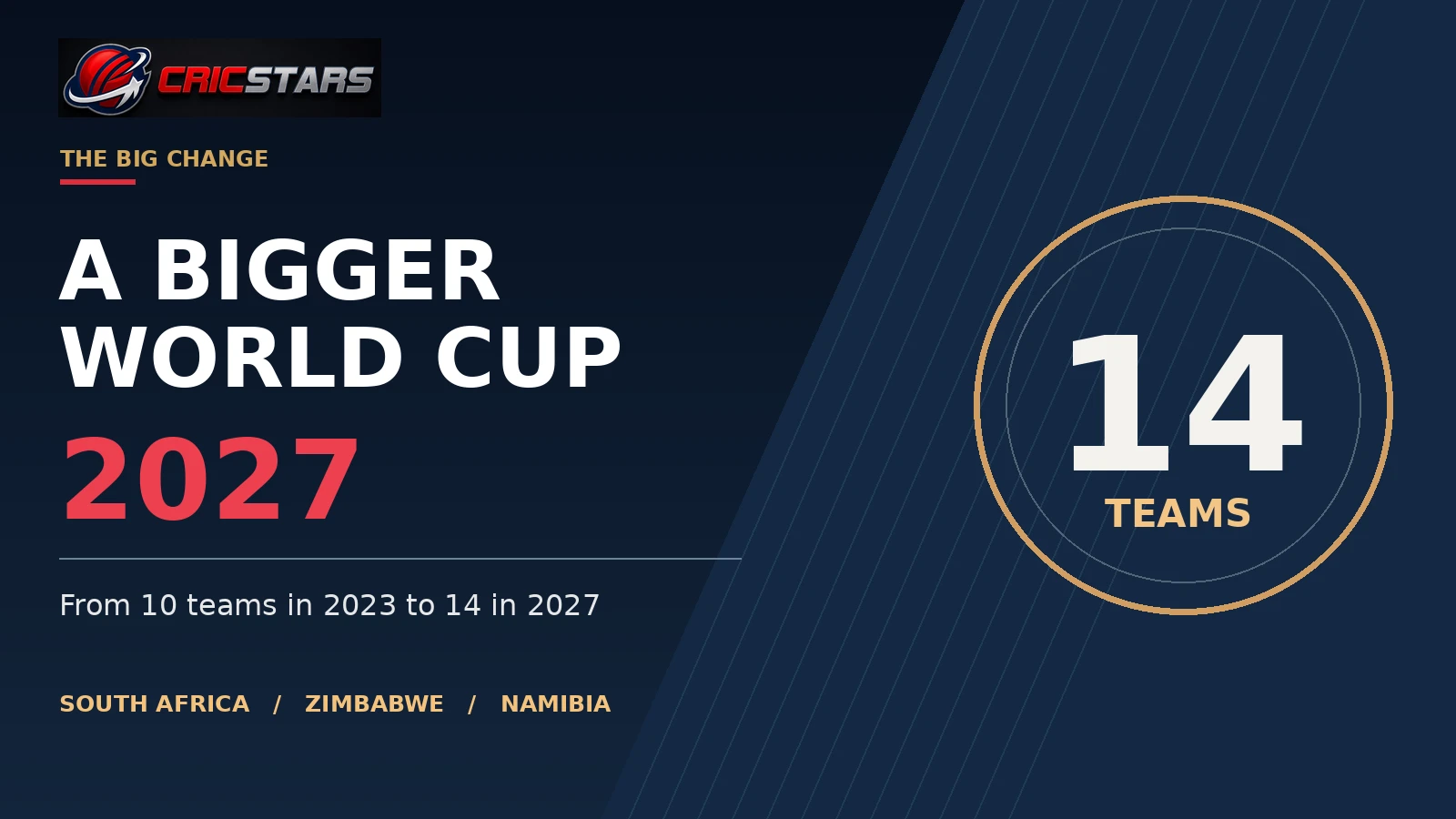
Fourteen teams will compete across South Africa, Zimbabwe and Namibia from 2 October to 21 November 2027. That is four more teams than the 2023 edition, which Australia won after beating India in the final. The tournament will also feature 57 matches across 12 venues, giving more countries a chance to compete on cricket's biggest ODI stage.
But the most interesting change is not simply the number of teams. The ICC has introduced a new structure that includes a Super Series, two groups of six and a Super 7 round before the semi-finals. It means some teams must fight for their place in the main competition, while those reaching the final stages will face a demanding series of matches against strong opposition.
For cricket fans, the new system may take some getting used to. Here is how it works, why the ICC has changed it and what the format could mean for the teams hoping to lift the World Cup.
From 10 Teams to 14: Why the World Cup Is Expanding
The 2023 Cricket World Cup followed a simple system. Ten teams played each other once during the league stage, and the top four qualified for the semi-finals. Every team had nine matches to build its campaign before the knockout rounds began.
The 2027 edition moves away from that structure. There will be 14 teams, but they will not all compete in one large league table. Instead, the competition will begin with a short qualifying round before the main group stage.
This change gives more countries an opportunity to reach the World Cup. Fourteen teams last competed in the Men's ODI World Cup in 2015, before the number was reduced to ten for the 2019 and 2023 editions.
The expansion matters because international cricket needs opportunities for countries outside its most established teams. Playing against leading nations at a World Cup can help developing teams gain experience, attract attention at home and build interest among younger supporters.
However, a larger tournament also brings challenges. More teams do not automatically mean closer matches, and a longer event can be difficult to follow. The ICC's new format is designed to make matches meaningful while offering a wider range of countries the chance to compete.
Whether it achieves that balance will become clearer when the tournament begins.
How the New Cricket World Cup 2027 Format Works
The most important thing to understand is that the 2027 World Cup will have three main stages before the semi-finals: the Super Series, the group stage and the Super 7.
Although 14 teams will take part in the overall tournament, only 12 will reach the main group stage. The other two will be eliminated during the opening Super Series.
The structure may sound complicated at first, but each round has a clear purpose.
Stage 1: The Super Series
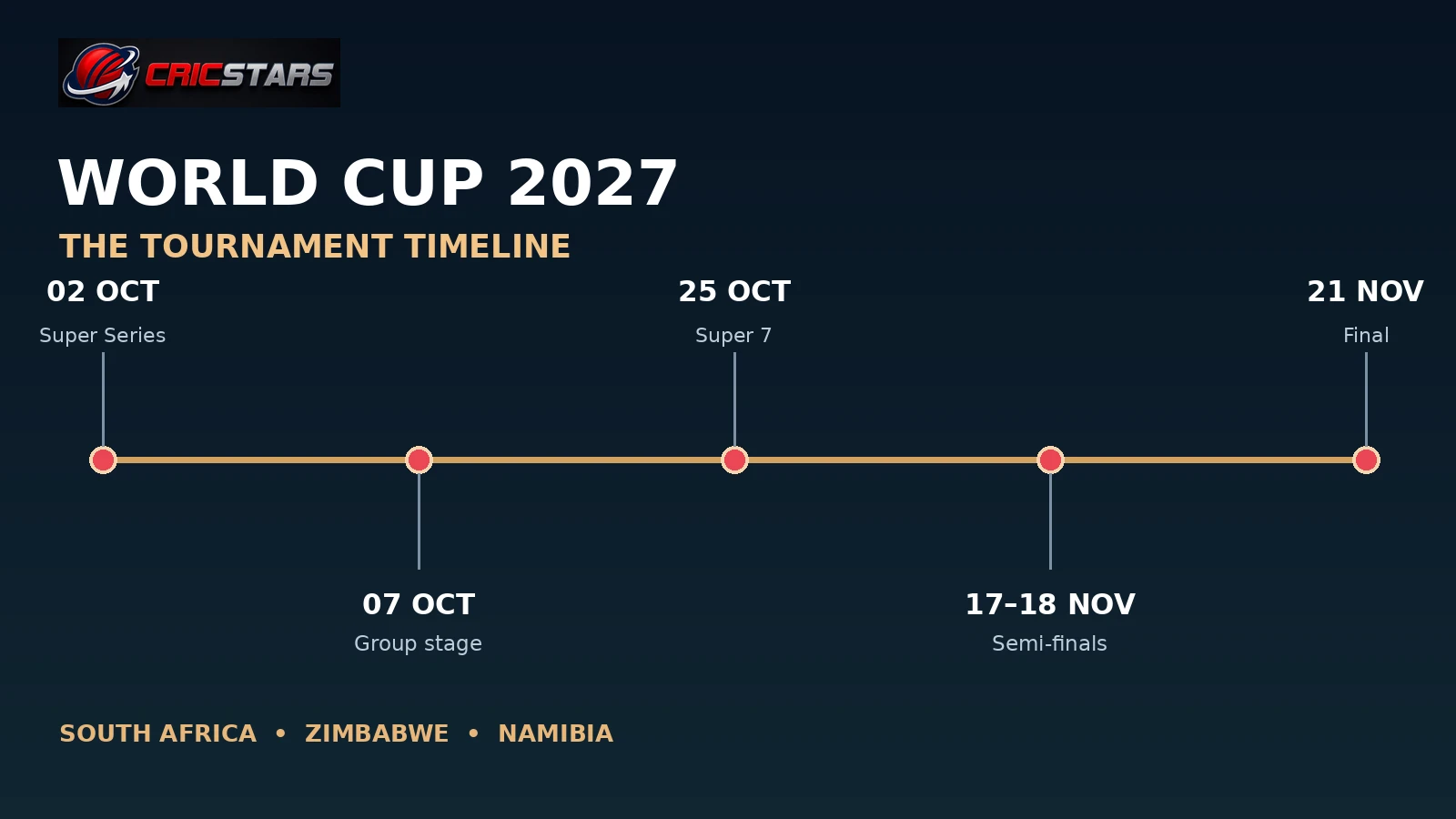
The tournament begins on 2 October 2027 in Windhoek, Namibia, with three teams competing for the final place in the main group stage.
These will be the teams finishing second, third and fourth in the preceding Cricket World Cup Qualifier. They will play each other once in a short round-robin competition.
The team finishing first will advance, while the other two will leave the tournament before the main group stage begins.
All three Super Series matches are scheduled in Namibia, on 2, 4 and 6 October. That gives the host country an important role at the very beginning of the World Cup.
For the teams involved, there will be little room for mistakes. Two matches may be all they have to prove they deserve a place alongside the leading ODI nations.
This opening stage also creates an unusual situation: although the competition officially begins on 2 October, several of the biggest teams will not start playing until the group stage begins on 7 October.
Stage 2: Two Groups of Six
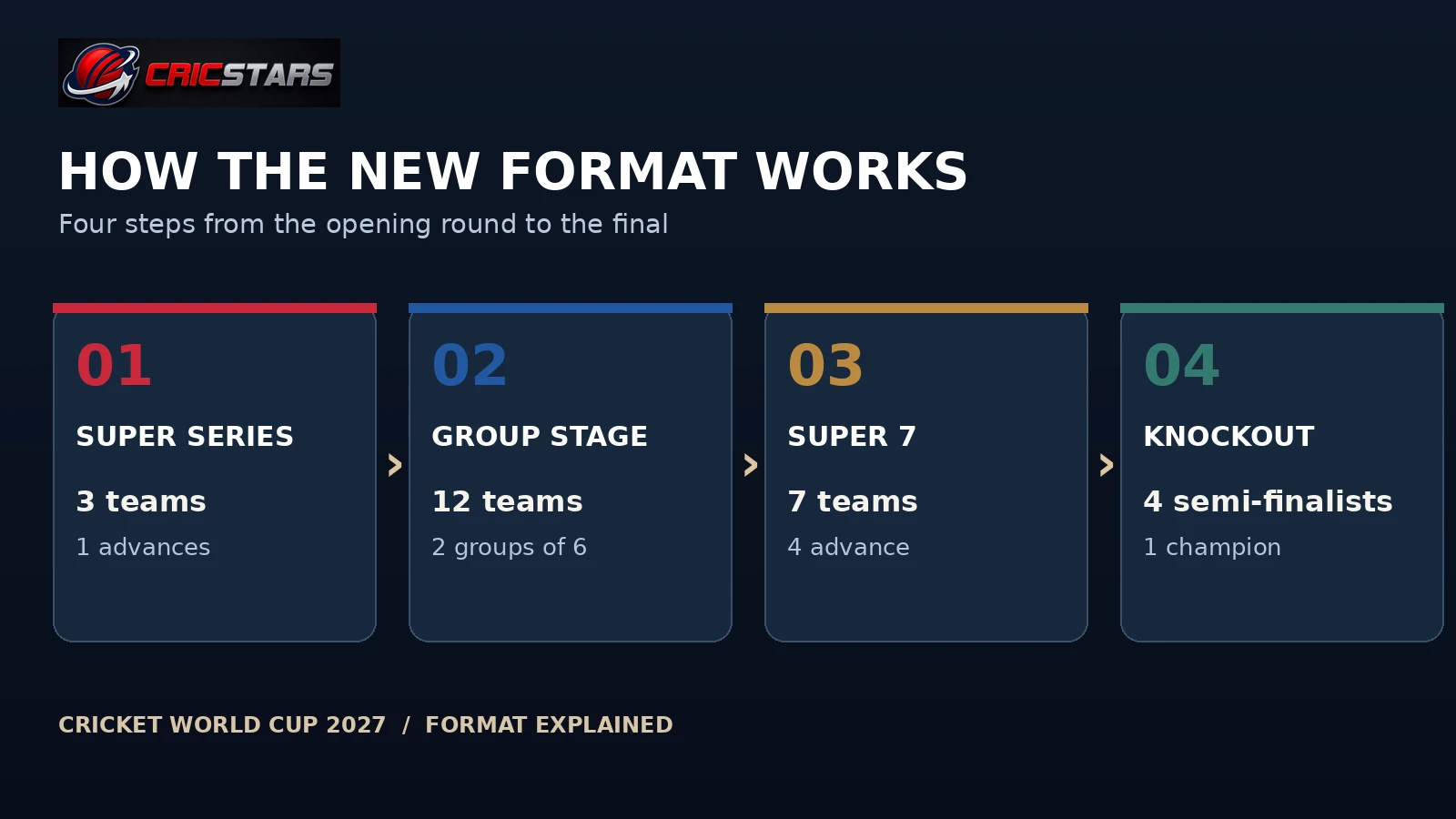
Once the Super Series ends, the 12 remaining teams will be divided into two groups of six. Every team will face the other five countries in its group once, producing 30 matches across this stage.
The top three teams from each group will qualify for the Super 7. The seventh place will go to the better fourth-placed team from the two groups, based on the competition rules.
This is one of the most important differences from the 2023 World Cup.
In the previous tournament, four teams advanced from a single league table. In 2027, a team could finish fourth in its group and still have a chance to move forward.
That could make the final group matches especially interesting. A team that misses out on third place might still qualify if its record is stronger than the fourth-placed side in the other group.
At the same time, the shorter group stage means every result could carry greater weight. Teams will have only five matches rather than nine to put themselves in a qualifying position.
Cricket World Cup 2027 Groups: Who Will Play Whom?
The ICC has already confirmed the two groups, with several major rivalries set to return.
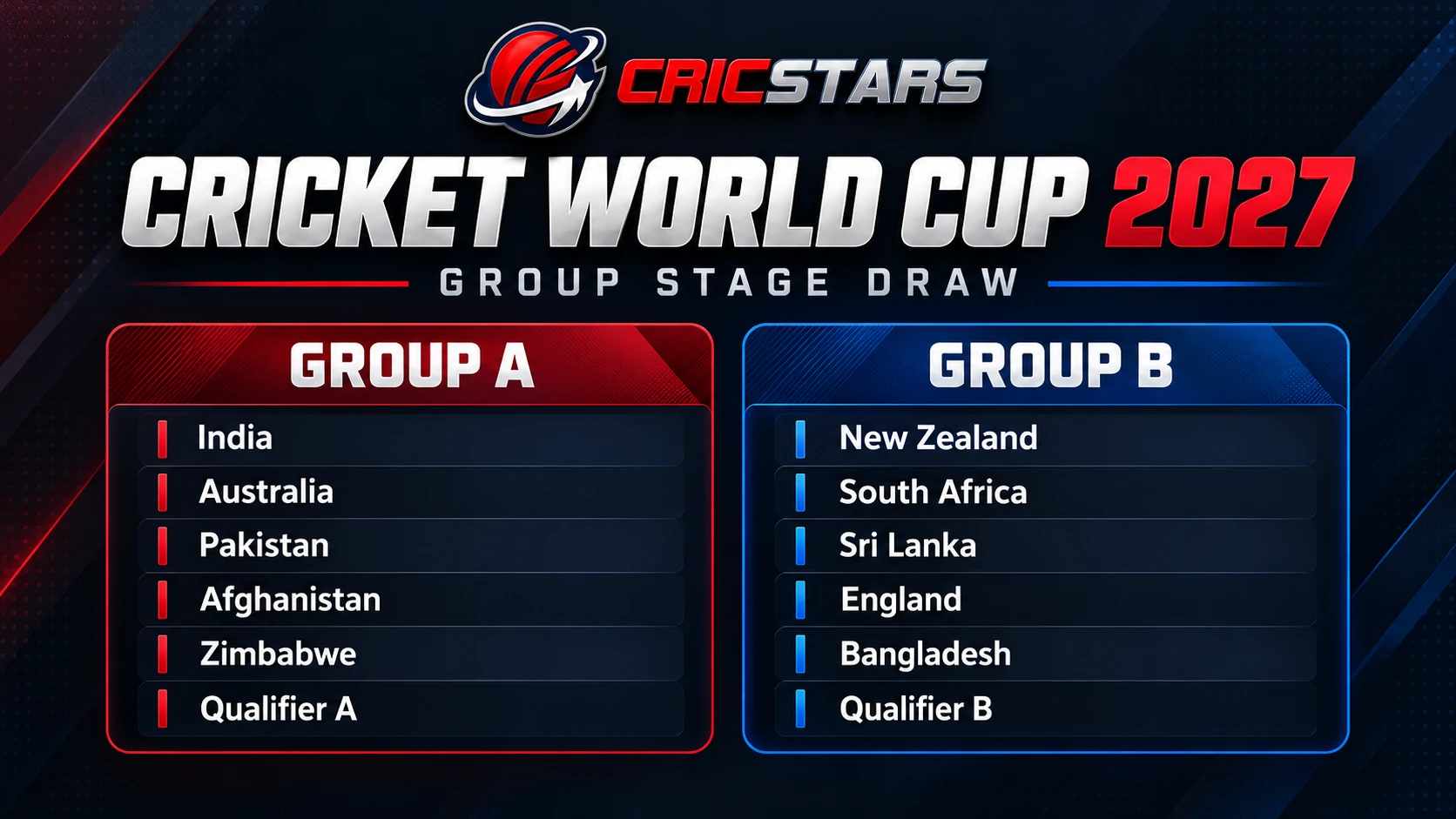
Group A includes India, Australia and Pakistan, three teams with a long history of major World Cup matches. Afghanistan will also be an important opponent, having shown in recent years that they can challenge more established sides. Co-hosts Zimbabwe complete the confirmed teams in the group.
Group B brings together New Zealand, South Africa, Sri Lanka, England and Bangladesh, along with another qualifier. It offers an interesting mix of teams with different strengths, from experienced fast-bowling attacks to batting line-ups comfortable in a wide range of conditions.
India and Australia will meet in Cape Town on 7 October 2027 in a repeat of the 2023 World Cup final. India will then face Pakistan in Johannesburg on 10 October, a fixture likely to attract attention well beyond the two countries.
For New Zealand, facing South Africa on African soil will be an important early challenge. England and Sri Lanka will also provide strong opposition as the BLACKCAPS try to reach the next round.
With only five group matches available, even the established teams will need to find their best form quickly.
The Super 7: Where the World Cup Could Be Won or Lost
The biggest change to the tournament comes after the group stage.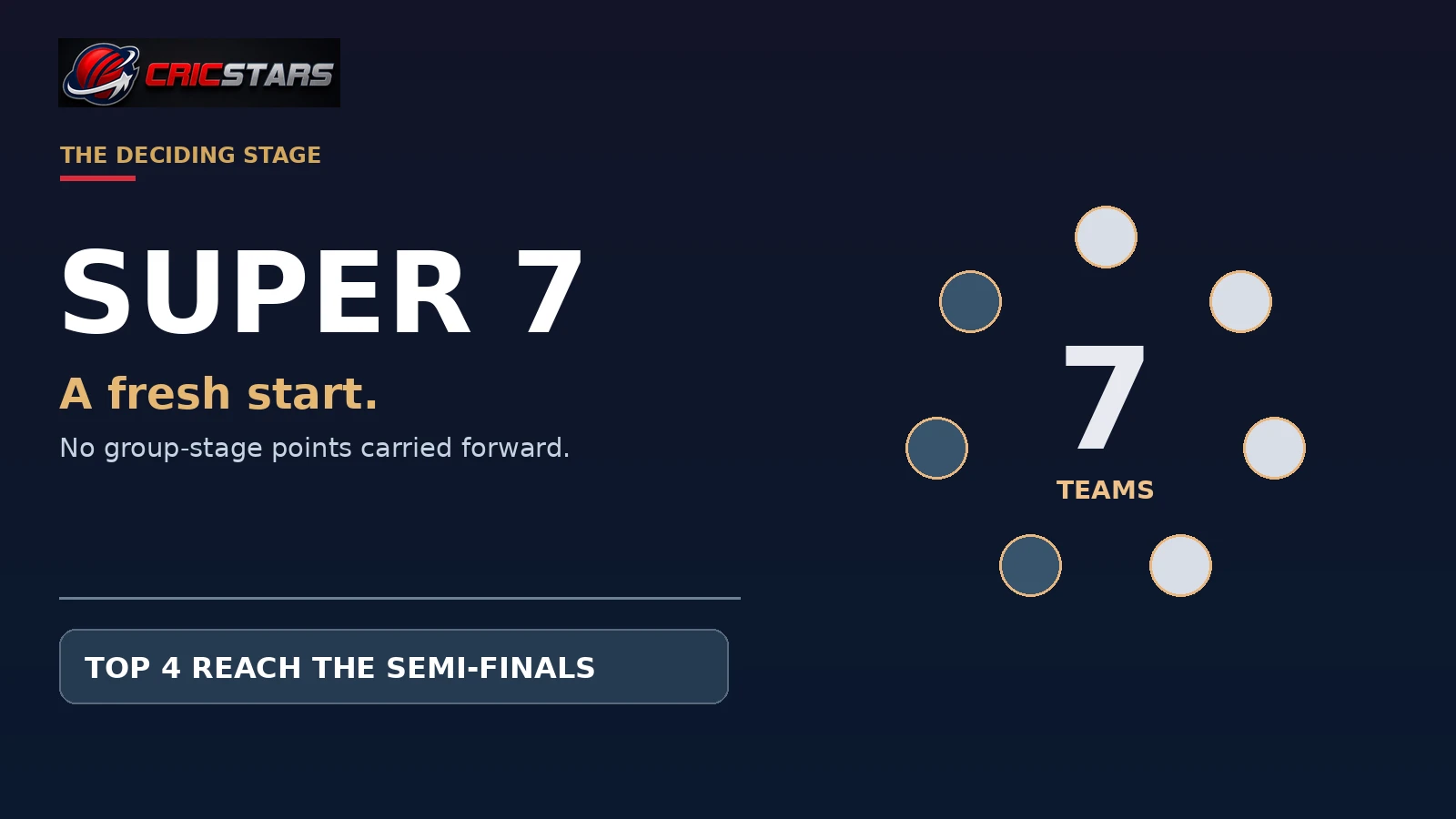
Seven teams will qualify for the Super 7, where each side will play the other six teams once. This will produce 21 matches, with the top four teams moving into the semi-finals.
Most importantly, no points will be carried forward from the group stage. Every team that reaches the Super 7 will start again from zero.
This creates a very different challenge from the opening round. A team might dominate its group and still struggle in the Super 7, while another side could recover from a difficult start to the tournament.
For example, India could win all five of their group matches and enter the Super 7 with confidence. However, those earlier victories would not give them any points in the new table. They would still need to perform against six other qualified teams to earn a semi-final place.
The same would apply to New Zealand, Australia, South Africa and every other team that makes it through.
The format puts a strong focus on consistency. A good opening week will help a team qualify, but success in the Super 7 will depend on how well it handles another demanding series of matches.
There is also a question of fitness and squad depth. Teams reaching the final will need to play several high-pressure ODIs over a number of weeks, often against opponents with very different playing styles.
Having a reliable first eleven will matter, but so will the ability to replace injured or tired players without losing too much strength.
What Happens After the Super 7?
The four highest-placed teams in the Super 7 standings will qualify for the semi-finals.
The team finishing first will face the fourth-placed team, while the second and third-placed sides will meet in the other semi-final. The winners will then compete for the World Cup trophy.
The semi-finals are scheduled for 17 and 18 November 2027, with the final set for 21 November in Johannesburg.
This arrangement gives teams a clear reason to finish as high as possible in the Super 7 table. First place brings a semi-final against the fourth-placed side, although tournament cricket has often shown that rankings alone cannot decide knockout matches.
One poor day can still end a strong World Cup campaign.
The final rounds will test more than cricketing skill. Captains will need to make good decisions, players must handle pressure and teams will have to adjust to the conditions at different venues.
That is part of what makes the new format interesting. The path to the semi-finals will be longer, but every team that reaches that stage will have earned its place through several rounds of competition.
Why Playing in Africa Makes the 2027 World Cup Special
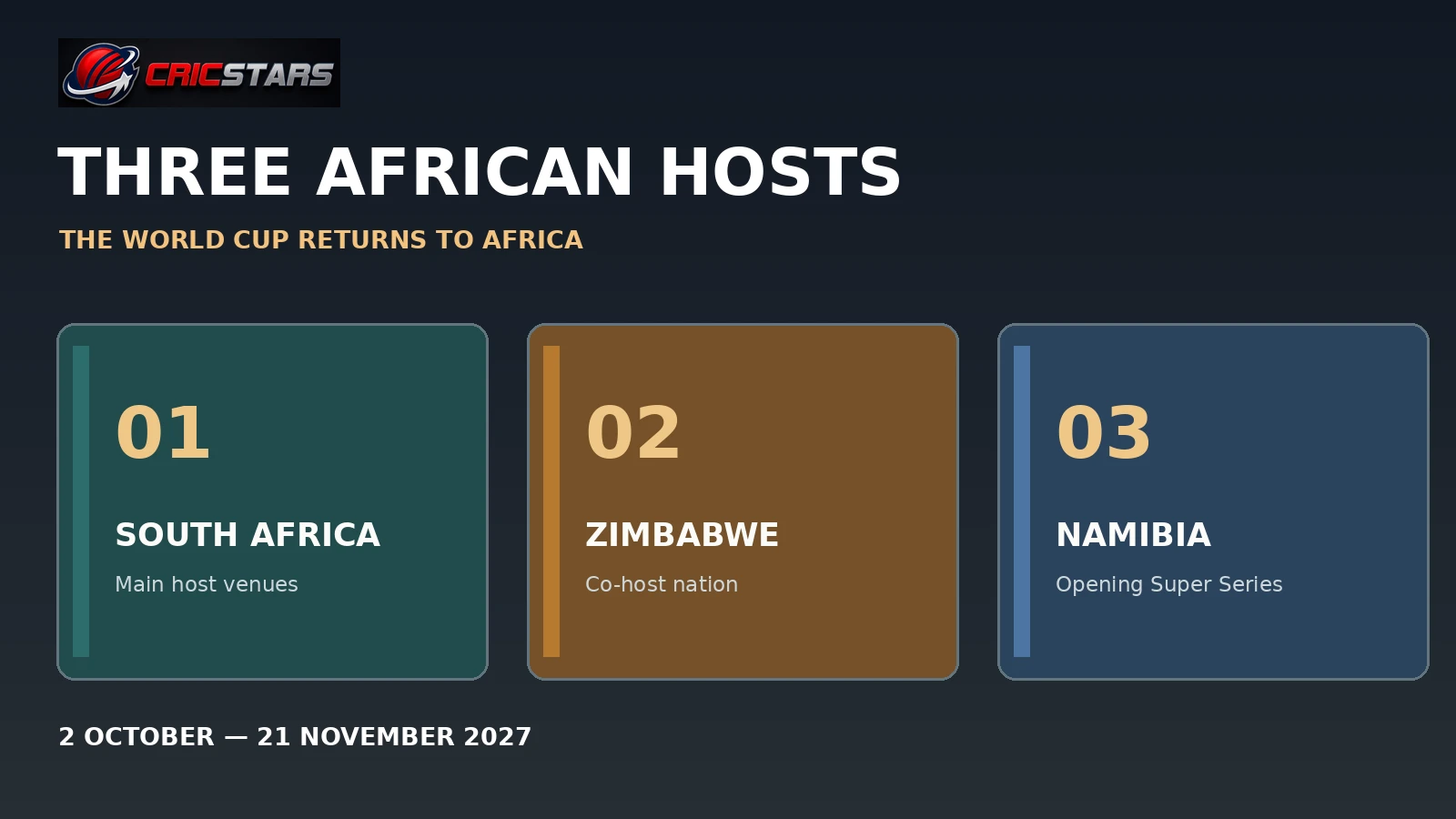
The 2027 edition will bring the Men's ODI World Cup back to Africa for the first time since 2003, when South Africa, Zimbabwe and Kenya hosted the tournament.
This time, South Africa and Zimbabwe will share hosting duties with Namibia, which will stage matches at a senior Men's World Cup for the first time.
The tournament will be played across eight venues in South Africa, three in Zimbabwe and one in Namibia. Matches are scheduled in major cricket centres such as Johannesburg, Cape Town, Durban, Harare and Bulawayo, as well as other locations including Windhoek and Victoria Falls.
One venue that could attract special attention is the new Mosi-oa-Tunya Stadium near Victoria Falls in Zimbabwe. India are scheduled to face Zimbabwe there on 24 October, bringing World Cup cricket to a location known around the world for its natural beauty.
The different host countries could also create interesting challenges for teams. Weather, pitch conditions, travel and the atmosphere at each ground may all influence how matches are played.
South African venues are often associated with pace and bounce, although conditions can vary from ground to ground. Zimbabwe and Namibia will offer their own challenges, making preparation and quick adjustment important for visiting teams.
For local cricket supporters, hosting the tournament is also an opportunity to watch some of the best players in the world without travelling overseas.
How Teams Qualify for the 2027 Cricket World Cup
The ICC has confirmed that South Africa and Zimbabwe qualified automatically as hosts. Another eight teams secured their places through the ICC Men's ODI Team Rankings at the 30 September 2026 cut-off.
That accounts for ten of the 14 places available in the tournament.
The remaining four places will be decided through the Cricket World Cup Qualifier. The winner of that competition will move directly into the main group stage, while the teams finishing second, third and fourth will enter the Super Series.
Only one of those three Super Series teams will advance.
This system gives the qualification tournament extra importance. Finishing first provides a direct route into the group stage, but finishing among the next three still keeps a team's World Cup hopes alive.
For developing cricket nations, that creates both an opportunity and a difficult challenge.
Reaching the World Cup through the qualifier is an achievement, but the teams entering the Super Series must then survive another round before facing the established sides in the group stage.
It also means the full list of teams playing in the main World Cup groups will not be complete until 6 October 2027.
Is the New Format Better Than the 2023 World Cup?
There are strong arguments in favour of the changes, but the new structure also comes with risks.
The biggest advantage is that more countries will have an opportunity to compete. Expanding from ten to 14 teams gives the World Cup a wider reach and offers more players the chance to experience international cricket's biggest ODI event.
The Super 7 could also produce an exciting final stage, with seven strong teams competing for four semi-final places. Because no points carry over, teams will need to keep winning rather than rely on results from earlier in the tournament.
However, the format is less simple than the one used in 2023. Casual supporters may find it harder to follow the route from the Super Series to the groups and then into the Super 7.
There is also the question of fairness. One team might finish fourth in its group and advance, while another fourth-placed side goes home. Although the qualifying method is part of the rules, supporters may still debate the outcome if the two groups prove to be very different in strength.
Another issue is the number of matches. Teams reaching the final will play a demanding schedule, and some countries will have a longer journey through the competition than others.
None of these concerns automatically makes the new system a bad one. The real test will be whether it produces competitive matches, gives more countries a fair chance and keeps supporters interested throughout the tournament.
A successful format should reward good cricket without making the route to the trophy unnecessarily difficult to understand.
Cricket World Cup 2027: Important Dates
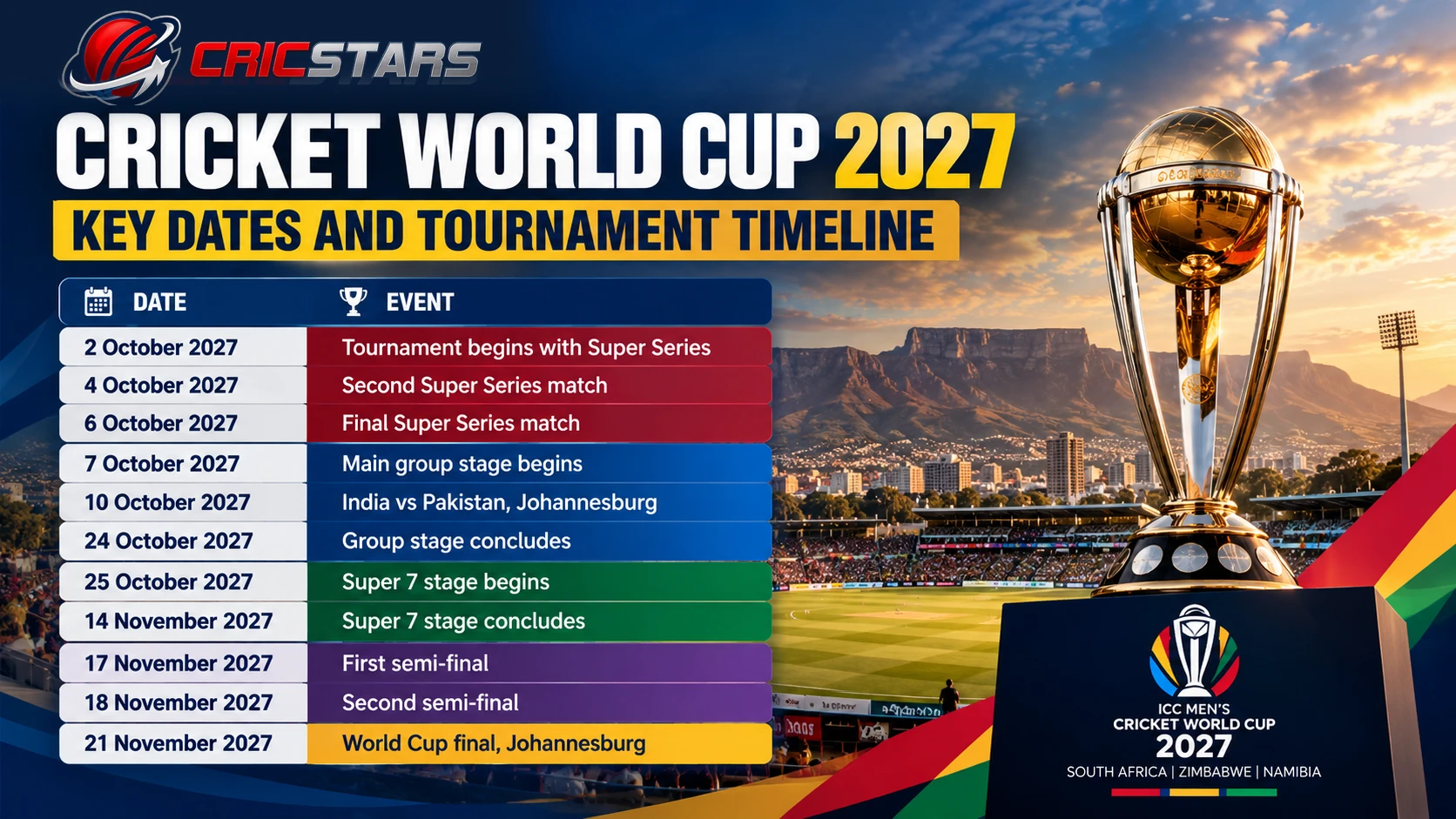
The ICC has confirmed the key dates for the competition, giving fans plenty of time to plan ahead.
| Date | Event |
|---|---|
| 2 October 2027 | Tournament begins with Super Series |
| 4 October 2027 | Second Super Series match |
| 6 October 2027 | Final Super Series match |
| 7 October 2027 | Main group stage begins |
| 10 October 2027 | India vs Pakistan, Johannesburg |
| 24 October 2027 | Group stage concludes |
| 25 October 2027 | Super 7 stage begins |
| 14 November 2027 | Super 7 stage concludes |
| 17 November 2027 | First semi-final |
| 18 November 2027 | Second semi-final |
| 21 November 2027 | World Cup final, Johannesburg |
A Bigger World Cup, With More at Stake
The 2027 Cricket World Cup promises something different for players and supporters. Fourteen teams will have the opportunity to take part, but reaching the main competition will be only the beginning for some of them. Others will need to survive five group matches and another six in the Super 7 before they can even think about the semi-finals.
For established countries such as India, Australia, New Zealand and South Africa, the new system will test their ability to perform consistently across a longer and more demanding campaign. For less experienced teams, it offers a chance to compete on the global stage and show how far their cricket has developed.
The tournament will also carry special meaning for its African hosts. South Africa and Zimbabwe will welcome the Men's ODI World Cup back after 24 years, while Namibia will experience the excitement of hosting senior World Cup matches for the first time.
There are still questions about how the new format will work in practice, particularly the Super Series and the decision to reset points before the Super 7. Those answers will come once teams begin playing.
What is already clear is that the road to the trophy will look very different from 2023. A good start will not be enough on its own, and teams hoping to become world champions will need to stay strong across several stages.
The expansion gives more countries a place in the competition. The new format will decide how difficult it is for them to stay there.
When the first ball is bowled in Windhoek on 2 October 2027, cricket will begin finding out whether this new approach can deliver a World Cup worthy of its bigger stage.
Sources: ICC: 2027 World Cup format and host cities (30 July 2026); ICC: 2027 World Cup schedule (1 October 2026).