
The 2027 Cricket World Cup will bring different opponents, grounds and pressures. India and New Zealand cannot solve every problem during this tour, but they can take important steps towards building stronger, more balanced teams. That gives this series a purpose beyond the result, and makes it one worth following from the opening match in Christchurch.
When the final ODI ends at Mount Maunganui on 15 November, the result will tell us which team performed better over five matches. What may matter more in the long run is how much both sides have learned about themselves.
For supporters, there will be plenty to enjoy: familiar rivals, experienced international stars, opportunities for returning players and the excitement of a long tour across New Zealand. For coaches and selectors, the value may be found in the smaller details that become clear as the series develops.
Nevertheless, the tour could help both sides avoid leaving important questions unanswered. New Zealand have already shown a willingness to test their ODI options, while India's squad announcement should provide more insight into their approach. Once the matches begin, performances will give selectors something more useful than predictions.
It would be a mistake to judge either team's 2027 World Cup chances entirely on the results of these five matches. There is still almost a year before the tournament begins, and much can change during that period. Injuries, form and new talent can all influence a team's plans.
Winning the ODI series will be the immediate goal, but both teams will also want to leave with a clearer idea of their best combinations. New Zealand will hope their returning players make strong cases for future selection, while India will want to see how their chosen squad performs in unfamiliar conditions.
What Will Success Look Like for Both Teams?
The Test matches will also form part of the World Test Championship, giving both teams another important target beyond their World Cup preparations. New Zealand's decision to change the ODI squad after the third match will allow some players to begin preparing for the first Test in Wellington.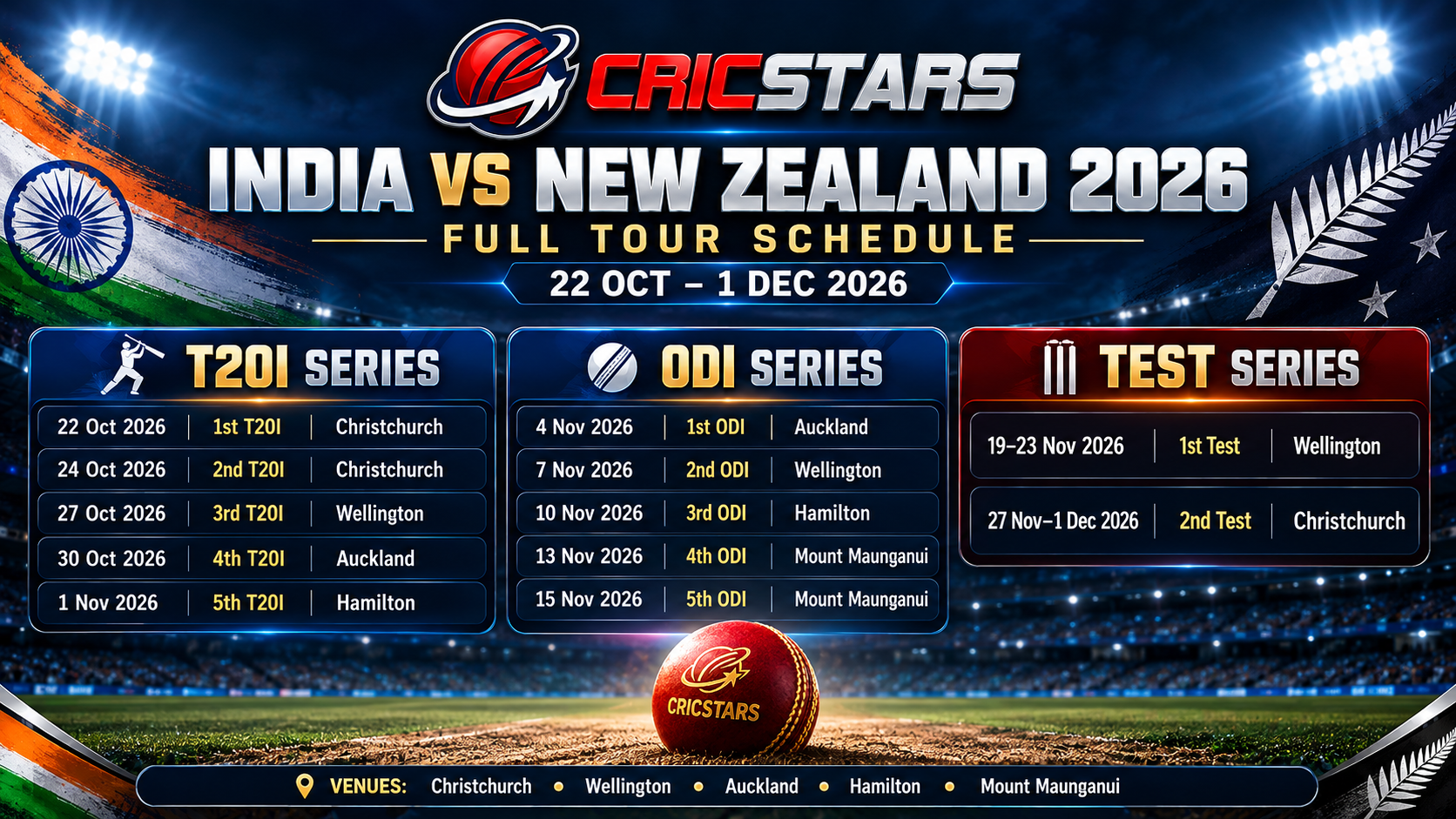
| Date | Match | Venue |
|---|---|---|
| 19 Nov –23 Nov 2026 | 1st Test | Wellington |
| 27 Nov–1 Dec 2026 | 2nd Test | Christchurch |
Test Series
| Date | Match | Venue |
|---|---|---|
| 4 November 2026 | 1st ODI | Auckland |
| 7 November 2026 | 2nd ODI | Wellington |
| 10 November 2026 | 3rd ODI | Hamilton |
| 13 November 2026 | 4th ODI | Mount Maunganui |
| 15 November 2026 | 5th ODI | Mount Maunganui |
ODI Series
| Date | Match | Venue |
|---|---|---|
| 22 October 2026 | 1st T20I | Christchurch |
| 24 October 2026 | 2nd T20I | Christchurch |
| 27 October 2026 | 3rd T20I | Wellington |
| 30 October 2026 | 4th T20I | Auckland |
| 1 November 2026 | 5th T20I | Hamilton |
T20I Series
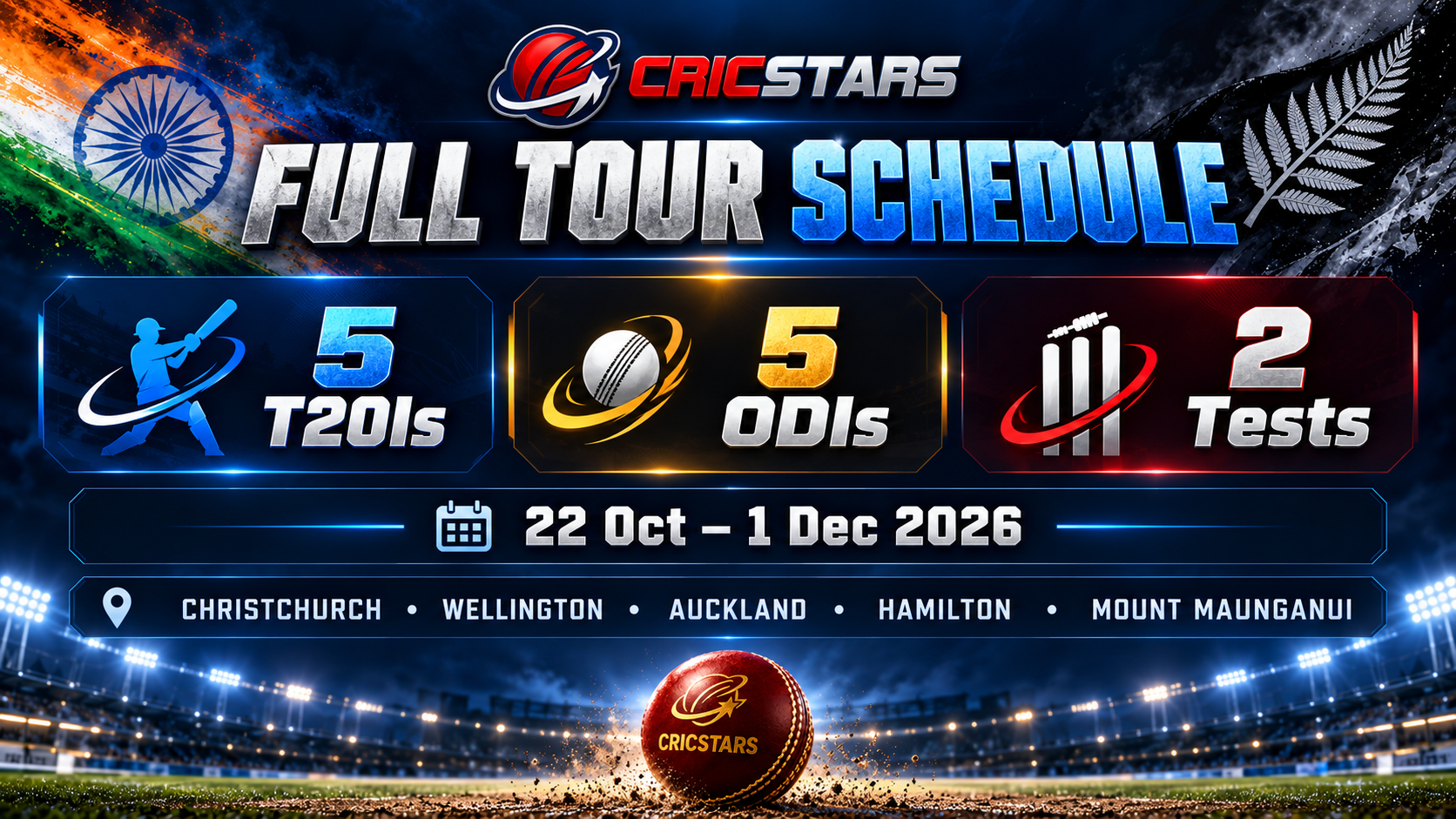
The 12-match tour will begin with five T20 Internationals, followed by five ODIs and two Test matches. Christchurch, Wellington, Auckland, Hamilton and Mount Maunganui will host the games.
India vs New Zealand 2026: Full Tour Schedule
Fielding and decision-making will matter too. Saving a few runs, holding a difficult catch or choosing the right bowling change can make a difference in a close ODI. These moments may not always attract as much attention as a century or a five-wicket haul, but they can reveal how well a team works together.
Bowling during this period is just as important. Captains must decide when to use their main wicket-taking options and when to keep overs available for the closing stages. A team that controls the middle overs can put itself in a strong position, whether it is batting first or chasing a target.
The middle overs will be worth watching closely. In 50-over cricket, teams must continue scoring between overs 11 and 40 without losing too many wickets. A strong opening partnership can be wasted if the middle order fails, while a slow start can still lead to a competitive total if the batters manage the innings carefully.
For India, the series could help identify which batting partnerships work best and whether the selected bowling attack has enough variety. New Zealand, on the other hand, will be able to compare established players with those returning to the ODI side. Both teams may also discover areas that need improvement before the World Cup.
One of the biggest advantages of a five-match ODI series is that teams have time to learn. A single match does not always provide a fair picture of a player's ability. A batter might get an excellent delivery early in an innings, while a bowler may have a difficult day despite following the team's plan. Over several matches, coaches can look for patterns and make better decisions.
Five ODIs Could Reveal More Than the Final Score
There is also a special atmosphere around this tour. New Zealand Cricket has described it as the largest inbound international tour in the organisation's history by number of matches. With games spread across five major centres, supporters around the country will have the chance to watch two of international cricket's strongest teams.
The upcoming tour gives India a chance to respond, this time on New Zealand soil. It also gives the BLACKCAPS an opportunity to build on their recent ODI success. However, both teams will know that previous results cannot win the next match. Different players, changing conditions and new challenges will make this another test of their skills.
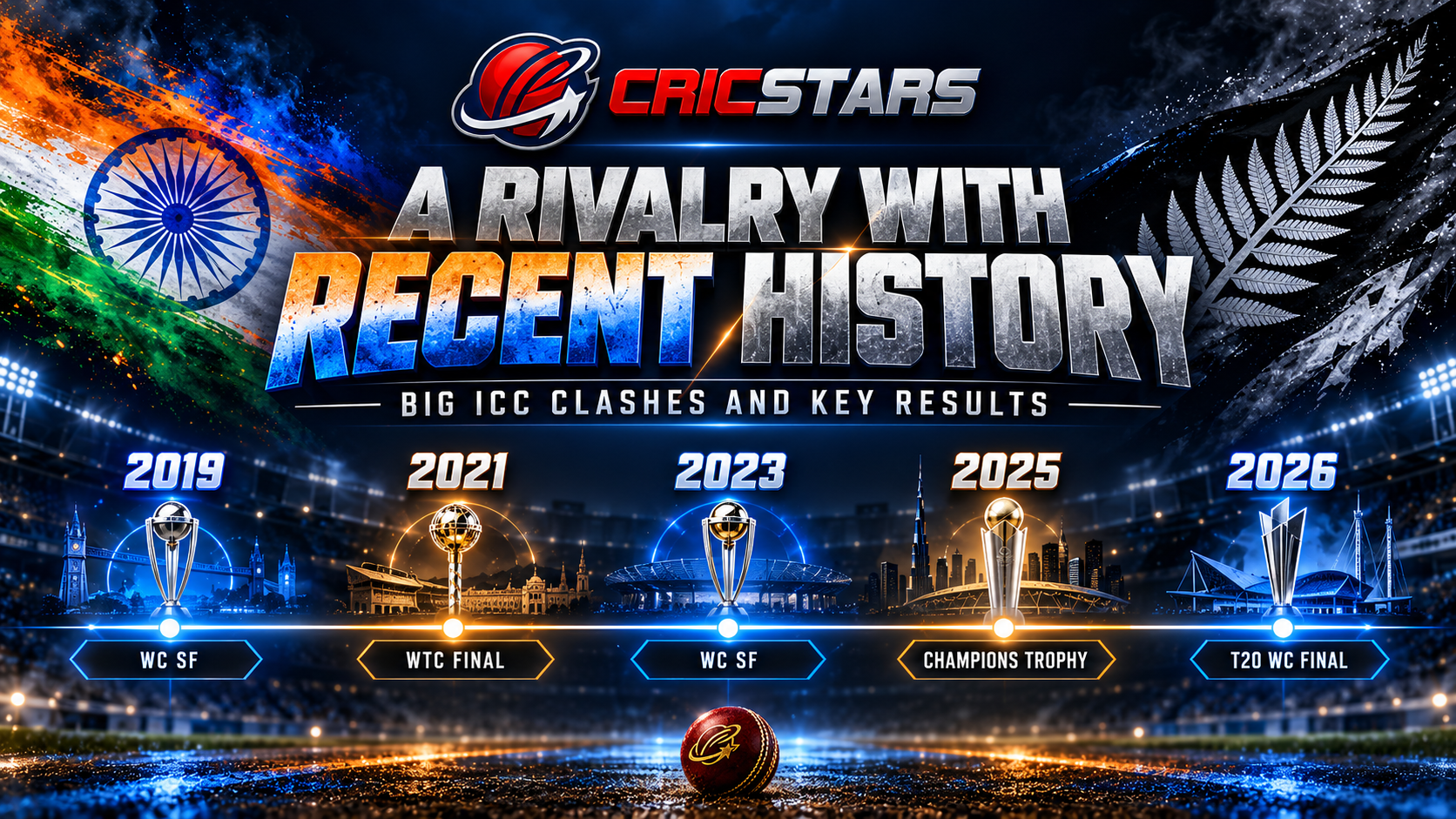
New Zealand have enjoyed success outside ICC tournaments too. Their 3-0 Test series victory in India in 2024 was a remarkable achievement, and the 2-1 ODI series win in January 2026 added another memorable result. Those performances showed that the BLACKCAPS could challenge India in conditions where the home side has traditionally been difficult to beat.
India have since enjoyed important victories of their own. They defeated New Zealand in the 2023 ODI World Cup semi-final in Mumbai and again in the 2025 Champions Trophy final. The two countries also met in the 2026 T20 World Cup final in Ahmedabad, where India came out on top.
Matches between India and New Zealand have carried extra interest in recent years, largely because of their meetings in major ICC tournaments. New Zealand ended India's hopes in the 2019 World Cup semi-final at Manchester and followed that success by defeating India in the 2021 World Test Championship final at Southampton.
A Rivalry Built on Memorable Matches
That does not mean India should play defensively. Good ODI batting is about understanding the situation. Sometimes a quick start is possible, while on other days a partnership of steady runs can put the team in a much stronger position. The New Zealand series will offer India a chance to see which players can make those decisions under pressure.
The conditions in New Zealand could make these decisions even more interesting. On some grounds, the ball can move early, forcing batters to be careful with their shot selection. Players who are comfortable scoring quickly on flat pitches may need to change their approach when the ball is swinging or seaming.
One area India will want to examine is the middle order. A team can have excellent opening batters and still struggle if it loses several wickets close together. Players who can rebuild an innings, rotate the strike and increase the scoring rate when needed are essential in ODI cricket. India must also decide how many all-rounders to include and which bowling combinations give them the best chance of taking wickets without allowing the opposition to score freely.
Shubman Gill captained India during their recent ODI series against the West Indies, with Rohit Sharma and Virat Kohli also included in that squad. Their experience provides India with a strong starting point, but the selectors will need to consider the team's overall balance when choosing the players for New Zealand.
As of 12 October 2026, the BCCI has confirmed India's T20I squad for the New Zealand tour, with Shreyas Iyer named captain and Tilak Varma appointed vice-captain. The ODI and Test squads have not yet been announced. As a result, it remains unclear which players India will select for the five 50-over matches.
India's challenge is slightly different. The country has a large group of talented cricketers, but selecting the right players for a major tournament is not always straightforward. Experience matters, especially in pressure situations, but younger players also need opportunities to prove that they are ready for international cricket.
India Have Their Own Selection Questions to Answer
Daryl Mitchell is another player who could have an important role. His performances helped New Zealand secure a historic 2-1 ODI series victory in India in January 2026. He brings experience to the middle order and has shown that he can build an innings against high-quality bowling. With Mitchell, Ravindra and several returning players available, New Zealand have an opportunity to explore different combinations without losing sight of winning the series.
Rachin Ravindra's return is another positive development for New Zealand. The young all-rounder made a major impression during the 2023 World Cup in India, where he scored three centuries. His ability to bat in the top order and provide an extra spin option gives the BLACKCAPS useful flexibility. After missing the T20I series because of a shoulder injury, the ODIs will also provide an opportunity for him to return to international action.
These qualities are valuable, but New Zealand will need to see how well the players fit together. A strong ODI team requires more than powerful hitters and fast bowlers. Batters must know when to attack and when to build partnerships, while bowlers need to remain effective across different stages of an innings. The upcoming series gives head coach Rob Walter and his staff a chance to study these details before making bigger decisions for 2027.
Allen's attacking batting could give New Zealand another option at the top of the order. He can put bowlers under pressure early, although ODI cricket also demands patience when conditions are difficult. Ferguson brings genuine pace and experience, which can be useful when a team needs wickets or wants to stop a strong batting partnership. Seifert offers another wicketkeeping option and can add attacking strength to the batting order.
The decision creates opportunities for players who have spent time away from ODI cricket. Finn Allen and Lockie Ferguson last played in the format in 2023, while Tim Seifert has not appeared in an ODI since the home series against Pakistan in 2025. All three have international experience, but they will now have a chance to show how they can contribute in the longer white-ball format.
New Zealand's squad selection is one of the most interesting parts of the upcoming series. Rather than keeping the same group throughout the five ODIs, the BLACKCAPS have chosen to make changes after the third match. Several players will leave to prepare for the Test series, while seven others will join the squad for the final two games. Mitchell Santner will captain both groups.
New Zealand Are Looking Beyond Their Regular ODI Players

Of course, playing in New Zealand will not be exactly like playing in Africa. The grounds, weather and pitches will present different challenges. However, the ability to adjust quickly is an important skill in international cricket. A team that learns to respond well when conditions change may be better prepared for the pressure of a World Cup.
India's opening group match against Australia in Cape Town on 7 October 2027 will be an early test of their World Cup plans. New Zealand will begin against hosts South Africa at the same venue on 9 October. Neither side will have much time to settle into the tournament, which makes their preparation over the coming year even more important.
India are in Group A alongside Australia, Pakistan, Afghanistan, Zimbabwe and a qualifying team. New Zealand will compete in Group B with South Africa, England, Sri Lanka, Bangladesh and another qualifier. The top three teams from each group, along with the better fourth-placed side, will progress to the Super 7 stage. That means every team will need to perform consistently rather than rely on one or two good results.
The 2027 Cricket World Cup will be played in South Africa, Zimbabwe and Namibia, with the tournament beginning on 2 October and the final scheduled for 21 November. Fourteen teams will take part, making it a larger competition than the 2023 edition, which featured ten sides. India and New Zealand have already qualified, but both face difficult routes through the group stage.
The World Cup Countdown Gives This Series Extra Importance
For cricket fans, the series promises another exciting chapter in a rivalry that has produced some unforgettable contests. For the teams themselves, it could be an important part of the journey towards the 2027 World Cup.
New Zealand have already shown that they are willing to try different combinations. Finn Allen, Lockie Ferguson and Tim Seifert are returning to the ODI setup, while Rachin Ravindra is also back after recovering from a shoulder injury. India, meanwhile, are yet to announce their ODI squad for the tour, leaving plenty of interest around the players who could feature in the 50-over matches.
The 2027 ICC Men's Cricket World Cup is now less than a year away, and neither India nor New Zealand can afford to leave all their planning until the final few months. Both sides have experienced players who know what it takes to compete at the highest level, but they also have decisions to make about their next generation of cricketers. The five-match ODI series, starting on 4 November, will give coaches and selectors an opportunity to see how different players perform against strong opposition.
India and New Zealand are preparing for one of the biggest cricket tours of 2026, with 12 international matches scheduled across three formats. The series begins in Christchurch on 22 October and continues until 1 December, bringing five T20 Internationals, five One Day Internationals and two Tests to New Zealand. There is plenty for supporters to look forward to, but the timing of the tour makes it especially important for both teams.
Sources: New Zealand Cricket; International Cricket Council (ICC); Board of Control for Cricket in India (BCCI).