
CRICSTARS | WOMEN CRICKET NEWS
Smriti Mandhana has spent much of her international career setting the tone for India with the bat. Now, she will be asked to set the direction for the whole team. The 30-year-old has been appointed captain of the Indian women’s side after Harmanpreet Kaur decided to step down from the leadership role, although Harmanpreet will continue playing international cricket.
For India, this is a major change at the top. For Mandhana, however, it feels less like a sudden promotion and more like the next step in a journey that has been building for years. She has served as Harmanpreet’s deputy, has already captained India when required and has developed into one of the most important players in women’s cricket.
Her leadership experience is not limited to international cricket either. Mandhana has captained Royal Challengers Bengaluru since the beginning of the Women’s Premier League and has already experienced both failure and success in the role. That journey may prove useful now that she has been handed India’s captaincy full-time.
Mandhana has been preparing for this role for years
Mandhana may be beginning a new chapter as India’s regular captain, but leadership itself is not new to her. She has already led India when Harmanpreet was unavailable, giving her experience of setting fields, managing bowlers and making decisions under pressure while still carrying the responsibility of opening the batting.
Her time with Royal Challengers Bengaluru has added another important layer to that development. RCB struggled during the first WPL season, and Mandhana also had a difficult tournament personally. The franchise, however, kept faith in her leadership. A year later, RCB won the 2024 title, and they lifted the trophy again in 2026.
The second title provided one of Mandhana’s strongest performances as both captain and batter. In the final against Delhi Capitals, she scored 87 from just 41 balls during the chase and was named Player of the Match. It was the type of performance captains are remembered for: taking responsibility when the game and the trophy were both on the line.
That early struggle with RCB is also important when assessing Mandhana as a leader. She was not handed instant success. She had to deal with poor results, criticism and the pressure that comes with leading one of the highest-profile franchises in Indian cricket. Instead of being replaced, she was given time to grow into the role, and two titles followed.
Taking charge at the peak of her career
There is another reason Mandhana’s appointment feels significant. She is taking over while playing some of the strongest cricket of her career.
Mandhana made her international debut in 2013 as a young left-handed opener with obvious talent and elegant strokeplay. Over more than a decade, she has developed from a promising batter into one of the most reliable run-scorers in the women’s game. Her cover drive remains one of her most recognisable shots, but her career is now defined by far more than style.
She has learned how to build longer innings, score in different conditions and adjust when opposition teams plan specifically for her. Over time, Mandhana has become one of the players opponents think about first when preparing to face India.
In September 2026, she moved past Mithali Raj to become the leading run-scorer in women’s international cricket across formats. She also went beyond former Australia captain Meg Lanning for the most international centuries in the women’s game, reaching 18 hundreds.
Those records carry real weight. Mithali was the backbone of Indian batting for years and one of the most influential players in the history of the women’s game, while Lanning was one of Australia’s greatest batters and captains. Mandhana reaching those landmarks shows how far she has travelled from the teenager who first entered international cricket in 2013.
From stylish opener to complete international batter
Early in Mandhana’s career, much of the attention centred on how easily she appeared to score. Her timing through the off side, especially the cover drive, quickly became a feature of her batting. But international cricket eventually asks for more than attractive strokeplay, and Mandhana has had to improve the harder parts of the game as her career progressed.
Her ability to turn starts into major scores has improved, while her approach against spin and during the middle overs has developed considerably. She has also become more comfortable changing the pace of an innings rather than relying only on attacking cricket from the start.
The 2024 season was one of the strongest examples of that growth. Mandhana scored 747 ODI runs during the year and made four centuries, finishing as the leading run-scorer in women’s ODIs. Her performances earned her the ICC Women’s ODI Cricketer of the Year award for the second time.
By then, Mandhana was no longer simply one of India’s best players. She had established herself among the leading batters in world cricket.
A central figure in India’s World Cup triumph
Mandhana’s importance became even clearer during India’s historic 2025 Women’s Cricket World Cup campaign. She entered the tournament as vice-captain and one of the players carrying the greatest responsibility at the top of the order.
She responded with 434 runs at an average of 54.25, including a century and two half-centuries. Mandhana finished as the tournament’s second-highest run-scorer and was later selected in the ICC Team of the Tournament.
One of her most important innings came against New Zealand when India needed a strong result to confirm their place in the semi-finals. Mandhana made 109, combining patience early in the innings with controlled aggression once she was settled. It was exactly the kind of innings India needed in a high-pressure game.
She also played an important part in the final against South Africa. Mandhana scored 45 and shared a 100-run opening partnership with Shafali Verma, giving India the platform they needed before going on to win by 52 runs and claim their first Women’s Cricket World Cup title.
Mandhana was not the captain of that side, but she was one of the players at the heart of its success. She now takes charge of India knowing what it feels like to win the biggest trophy in the game.
Following Harmanpreet will bring its own pressure
Mandhana is also taking over from one of the most important captains India have had. Harmanpreet Kaur’s leadership covered a period in which the profile, expectations and results of Indian women’s cricket changed dramatically.
Harmanpreet became India’s regular T20I captain in 2016 and later took charge of the ODI and Test sides after Mithali Raj retired in 2022. Under her leadership, India reached the 2020 Women’s T20 World Cup final, won silver at the 2022 Commonwealth Games and claimed Asian Games gold.
The biggest achievement came in 2025 when India won the Women’s Cricket World Cup on home soil. That victory took the team from being regular contenders to world champions and changed the standard against which future Indian sides will be judged.
Harmanpreet’s final period as captain also included another Asian Games gold medal in 2026. Mandhana is therefore not simply replacing a captain; she is taking over from a leader who helped guide India through one of the most successful periods in their history.
That creates pressure. India are no longer trying only to compete with the strongest teams. They are now expected to win major tournaments.
Harmanpreet remains part of the transition
One important detail may help Mandhana during the early months of her captaincy. Harmanpreet has stepped down as captain, but she has not retired from international cricket and remains part of India’s plans.
That makes this transition different from the one India experienced when Mithali Raj retired. Mandhana will have full responsibility as captain, while still having one of India’s most experienced players beside her in the dressing room and on the field.
For Harmanpreet, the change may also allow her to focus more closely on her batting without carrying the constant demands that come with captaincy. For Mandhana, having a former captain available could be valuable when matches become difficult or when younger players need guidance.
The balance will still need to be clear. Harmanpreet’s experience can help the team, but this is now Mandhana’s side to lead.
Mandhana will need to lead in her own way
Mandhana does not need to become another Harmanpreet Kaur. In fact, trying to copy the player she is replacing would probably make the job harder.
Their public personalities and styles are different. Harmanpreet has often been an emotional and aggressive presence on the field, while Mandhana usually appears calmer and more measured. That does not automatically make one approach better than the other, but it gives Mandhana the opportunity to build a leadership style that suits her personality.
The real test will come when things go wrong. Captaincy is simple to discuss when a team is winning. It becomes much harder after unexpected defeats, selection debates, poor tactical decisions or disappointing tournament exits.
Mandhana will now be the person expected to answer those questions. She will have to manage senior players, support younger teammates and make decisions that will not always be popular.
Those are the parts of captaincy that cannot be measured by batting averages or centuries.
More than a star batter
Mandhana’s importance to Indian cricket also stretches beyond the scorecard. Over the past decade, she has become one of the most recognisable faces of women’s cricket in India and around the world.
Her rise has taken place during a period of enormous change in the women’s game. Television audiences have grown, sponsorship has increased, domestic opportunities have improved and the launch of the Women’s Premier League has created a major professional competition for Indian players.
A new generation of young cricketers has grown up watching Mandhana in a way earlier generations could not. For many of them, she has been one of the most visible examples of what a professional career in women’s cricket can look like.
That makes her captaincy important beyond results alone. She will now become one of the main public faces of a team that carries far greater expectations than it did when she first played for India in 2013.
Zimbabwe will be the first step
Mandhana will not have to wait long to begin her new role. India are scheduled to host Zimbabwe in three T20Is followed by three ODIs, giving the new captain an immediate opportunity to settle into the job.
The T20I series begins in Raipur on October 16, with further matches on October 18 and 20. The ODI series will then move to Vadodara for matches on October 23, 25 and 28.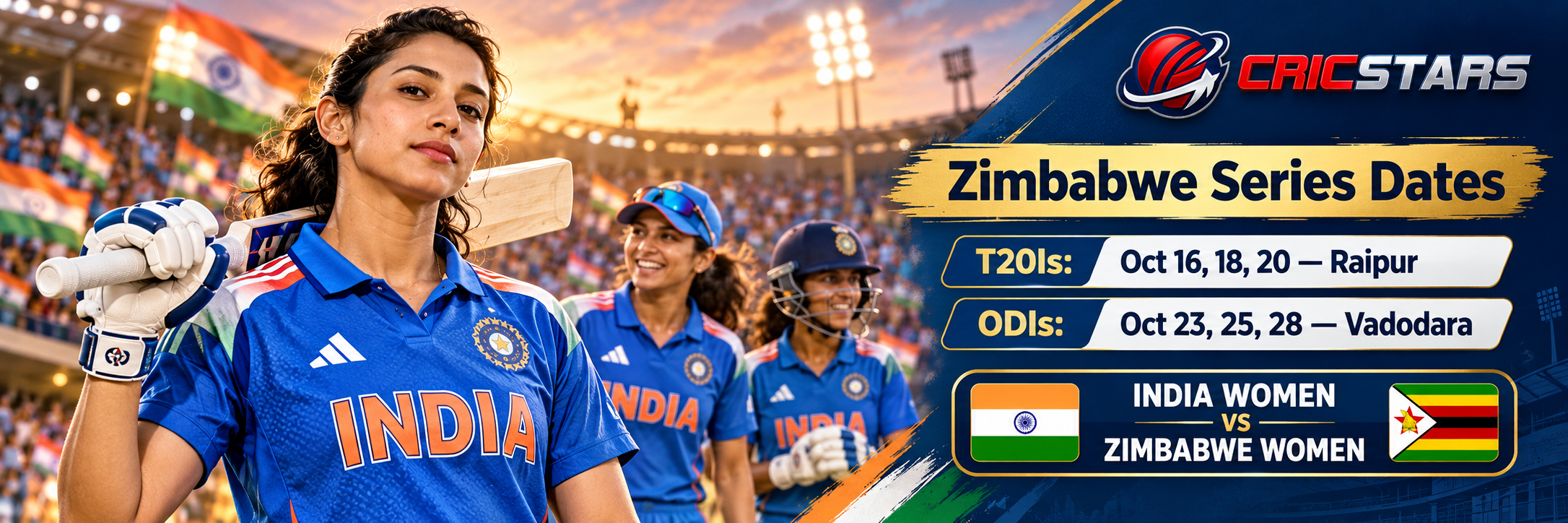
Shafali Verma has been named vice-captain for the T20I side, while Deepti Sharma will serve as Mandhana’s deputy in the ODIs. Harmanpreet is also part of India’s squads.
Zimbabwe may not represent the toughest challenge Mandhana will face as captain, but the series still matters. It gives her an opportunity to establish how she wants India to play, how she communicates with her bowlers and how responsibility is shared among the senior members of the team.
The bigger tests will come later against stronger opponents and in major tournaments. That is when Mandhana’s tactical judgement, temperament and ability to handle pressure will be examined most closely.
For more than a decade, India have relied on Smriti Mandhana to provide runs at the top of the order. They will now look to her for much more than that. When matches become tight, the final decision will be hers. When younger players need backing, she will be expected to provide it. When India lose, she will face the difficult questions.
Mandhana has spent years standing beside the captain. Now she has the responsibility herself, and the next phase of her career may be the most demanding one yet.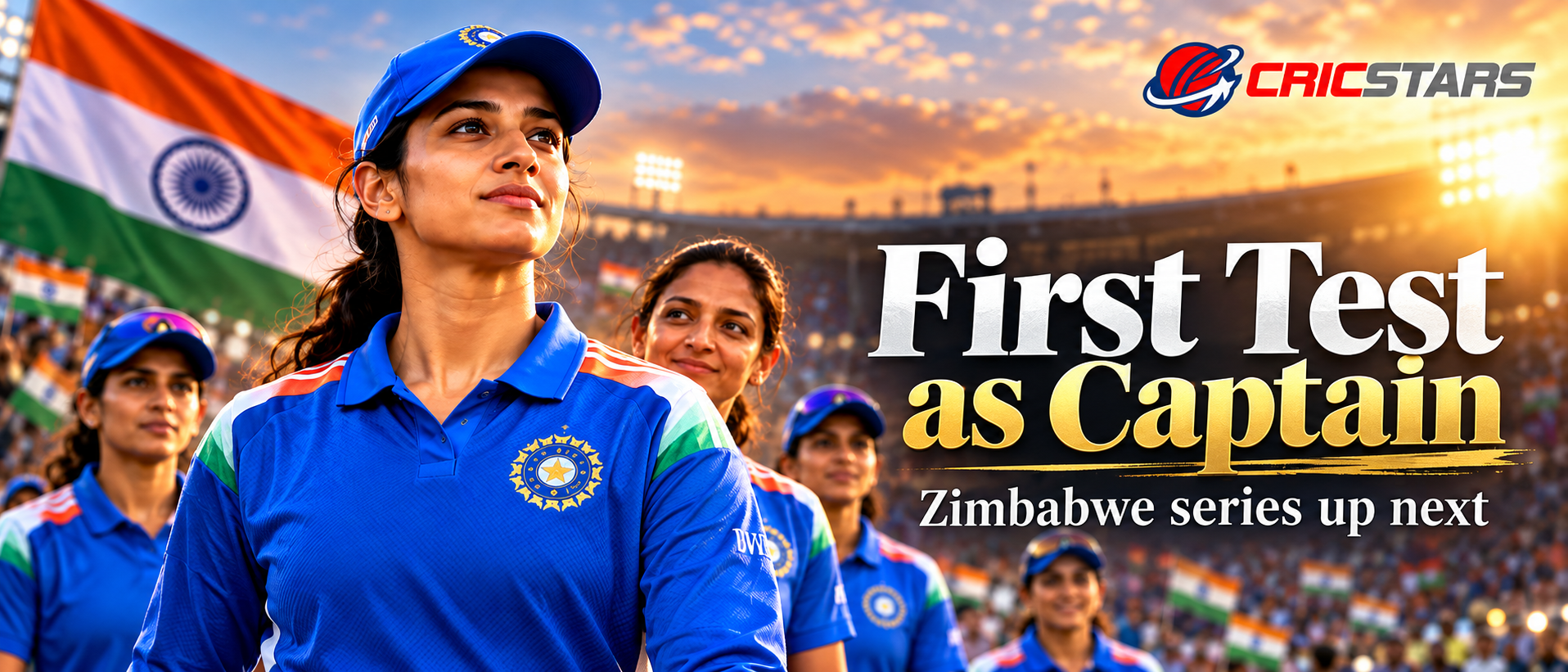
Sources: BCCI - India Women squads for Zimbabwe series; ICC - Smriti Mandhana named India captain