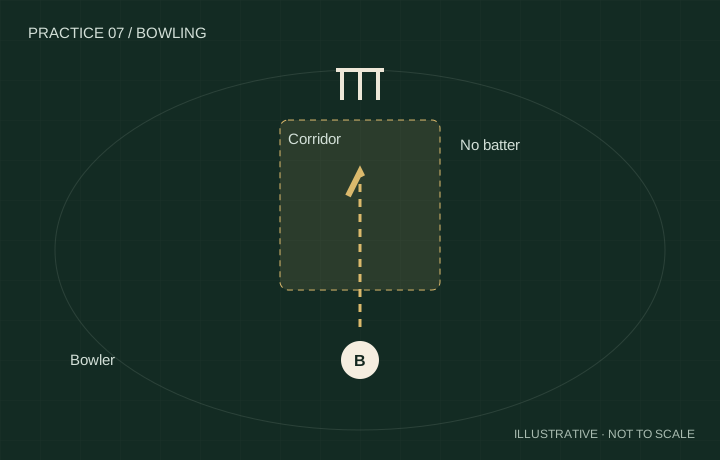
A bowler can aim at the stumps yet still struggle to repeat a line. Two rows of markers show a broad channel to bowl through, giving the player a clear picture of where each delivery travels. Keep the approach comfortable and focus on direction rather than speed. If balls keep missing on the same side, first ask the bowler to name the intended corridor and point out where each delivery landed. Keep the approach unchanged while observing a short set; avoid fixing several parts of the action at once. Allow about 12 minutes for the station, including explanation, turns and rest.
Set up the drill
Place two rows of flat markers to define a broad corridor towards the stumps. Keep markers out of the bowler’s landing and follow-through areas.
Equipment: Soft balls, flat markers, stumps.
How to run it
- Choose one comfortable approach.
- Bowl towards the corridor without a batter.
- Note whether each ball lands left, inside or right.
- Discuss a single directional cue after a short set.
- Repeat only within the player’s workload allowance.
Aim through the lane and finish towards the target.
A common mistake—and the fix
Chasing each miss with a new action change makes the pattern harder to read. Observe a short set before adjusting.
Widen the corridor or reduce the practice distance.
Narrow the corridor while keeping pace comfortable.
What to measure
Count landings within the corridor and record the most common miss.
Use the first round as the player’s starting point. Keep distance, ball and target size the same when comparing another round. These counts are practice observations, not selection standards or promises of improvement.
Before you start
Use flat markers; no obstacles on the run-up or landing area. Do not add extra deliveries simply to reach a score.
Use a soft ball for the version described here. Explain the stop signal, check the surface and keep waiting players clear. Adapt or stop if a player feels pain, distress or fatigue. Read the full safety and supervision guide.
Questions about this drill
What does line corridor help players practise?
A visible corridor gives the bowler feedback about direction without rewarding extra pace. Compare a small group of comfortable deliveries and look for a repeatable line.
How can I adapt this drill for a less confident player?
Make the corridor wider or shorten the practice distance. Keep bowling volume within the workload guidance that applies to the player.
What should I look for before increasing the challenge?
Count where comfortable deliveries land, not their speed. Stop if the action changes or the bowler becomes tired.