Organise school cricket around small, clearly separated soft-ball stations. Use a demonstrated stop signal, simple roles and a rotation that matches the available adult supervision. Avoid opening a batting station that cannot be supervised safely.
Set the boundaries first
Walk the group around the activity area. Identify waiting zones, throwing directions and out-of-bounds spaces. Keep bags and bottles away from routes. Check the surface and agree what happens when a ball enters another station.
Start with a three-station rotation
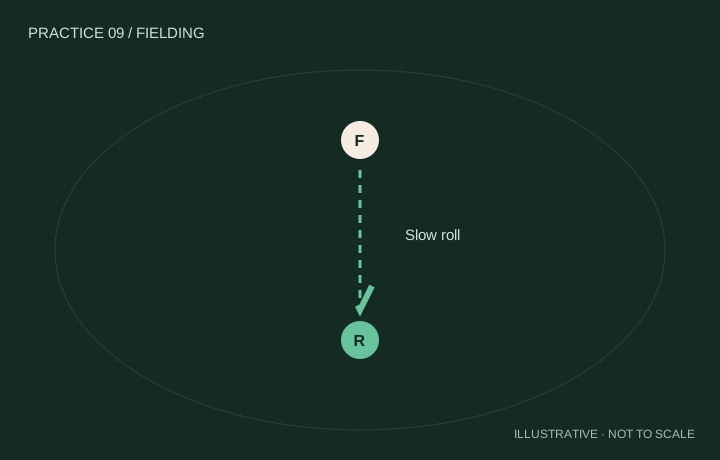
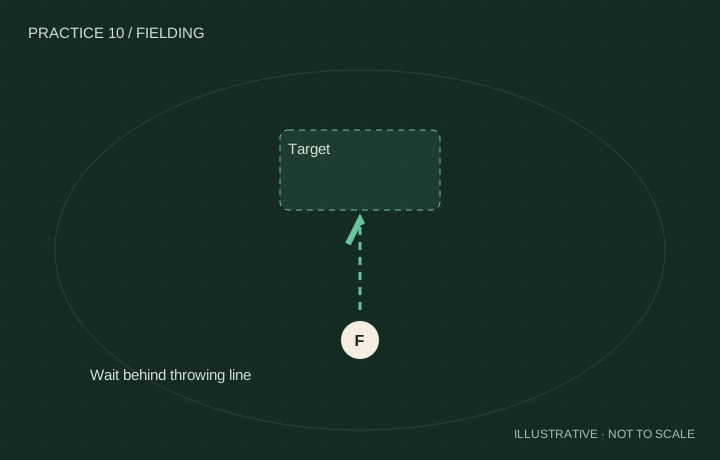
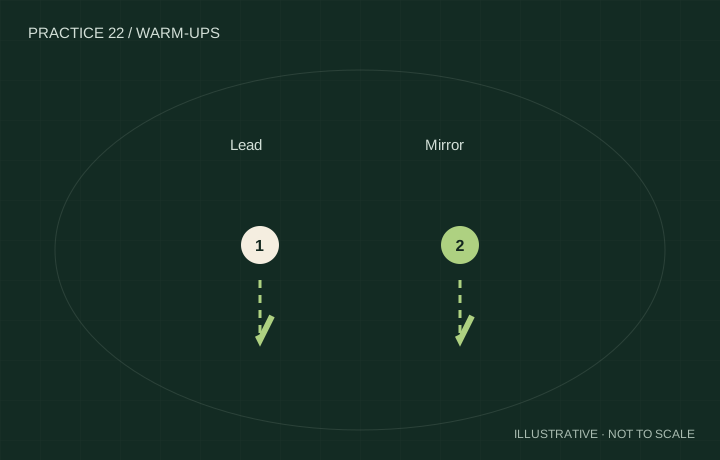
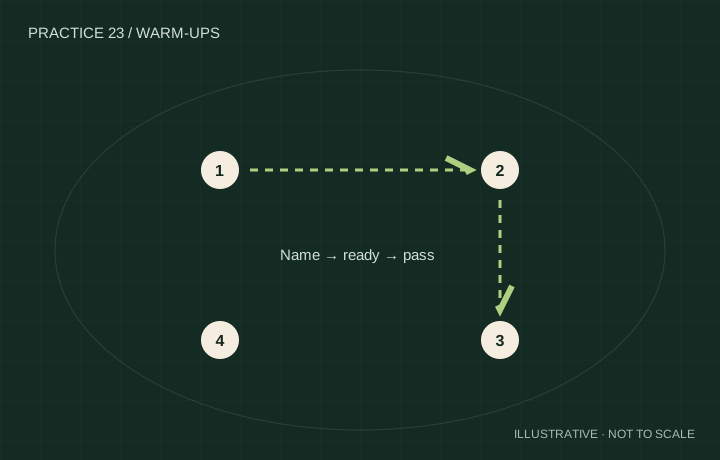
Use roll-and-gather, underarm target and catch-and-name as a low-equipment starting point. Demonstrate all three before rotation. Keep each group small enough that players are active without crossing into another group’s space.
Make roles meaningful
Rotate feeder, receiver, observer and equipment helper where appropriate. An observer can watch for a ready signal or balanced finish, not criticise technique. Avoid leaving the same confident players in the most active roles.
Include access needs from the beginning
Offer seated receiving, rolling instead of catching, larger balls and shorter distances. Use spoken and visual signals together. Consult the learner and school support plan when deciding how to adapt the task.
Use a simple lesson outline
For a 45-minute lesson, the included school session allows 5 minutes for setup, 5 for movement, three 8-minute stations, 6 for transitions and water, and 5 for review. Change the allocation to your class and timetable.
Plan your next session
Choose stations that work with the equipment, staff and space available. Allow time to explain boundaries and rotate groups safely. The session planner can help you make sure each group has a turn.