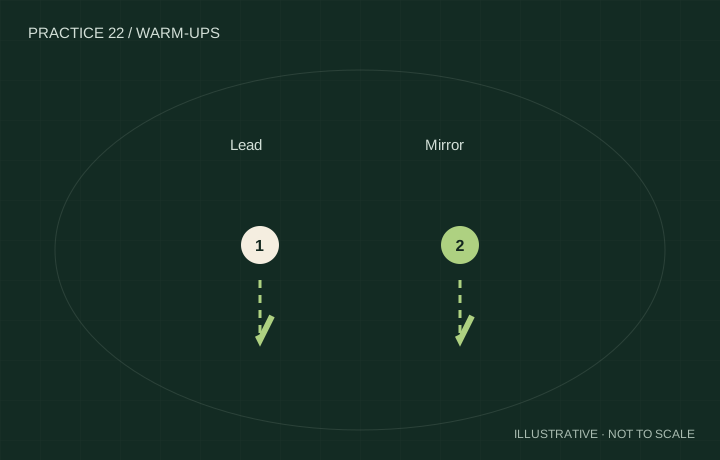
Before a fielding session, players can practise reacting to movement without chasing a ball. One partner leads with small steps while the other follows at a safe distance. The challenge is to keep watching, change direction smoothly and stay in their own space. If the follower starts guessing or crosses their feet, slow the leader and use shorter movements. Switch roles only after both partners can stay facing each other without entering another pair’s space. Allow about 6 minutes for the station, including explanation, turns and rest.
Set up the drill
Pairs face each other across a clear gap. Each pair has its own marked space.
Equipment: Cones.
How to run it
- One player leads with slow side steps.
- The partner mirrors the movement.
- Add small forward and backward steps if space allows.
- Switch leader after a short round.
- Finish with easy walking.
Small steps and eyes up.
A common mistake—and the fix
Moving too quickly makes the follower stumble. Slow the leader and reduce the travel distance.
Mirror upper-body movements while stationary or seated.
Add a soft-ball ready position at the end of each movement.
What to measure
Check whether both partners stay balanced and inside their area.
Use the first round as the player’s starting point. Keep distance, ball and target size the same when comparing another round. These counts are practice observations, not selection standards or promises of improvement.
Before you start
No touching, chasing or rapid pivots on a slippery surface.
Use a soft ball for the version described here. Explain the stop signal, check the surface and keep waiting players clear. Adapt or stop if a player feels pain, distress or fatigue. Read the full safety and supervision guide.
Questions about this drill
What does mirror footwork help players practise?
This warm-up asks players to watch a partner and make small changes of direction. Good control and personal space are more important than copying movements quickly.
How can I adapt this drill for a less confident player?
Start with slow arm or upper-body movements, including a seated option. Add gentle footwork only when there is enough room.
What should I look for before increasing the challenge?
Look for controlled movement and awareness of the partner. Reduce the pace whenever players start colliding or losing space.