Players need an easy way to move and stop safely in a group. Green, amber and red cues introduce gentle changes of pace while everyone stays in their own space. A clear stop signal matters more than how quickly anyone runs. If players keep moving after red, rehearse just walking and stopping before reintroducing other cues. Watch that everyone has space to slow down without bumping into another player. Allow about 6 minutes for the station, including explanation, turns and rest.
Set up the drill
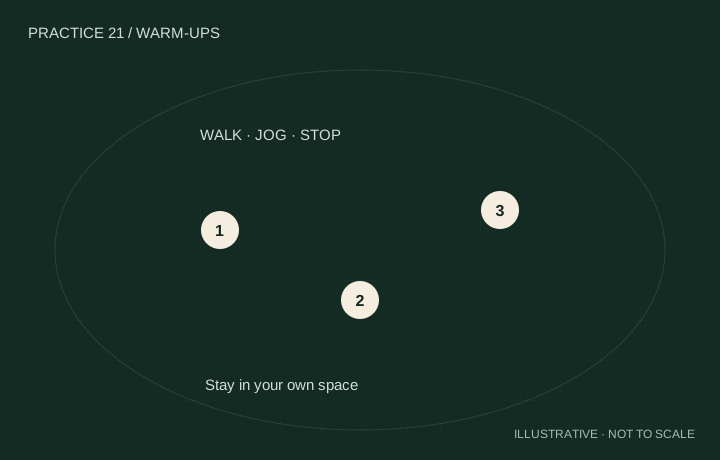
Mark an open area with room between players. Agree green for an easy jog, amber for walking and red for stopping in balance.
Equipment: Cones, optional cue cards.
How to run it
- Begin with walking.
- Call colours aloud and show a gesture.
- Introduce short periods of easy jogging.
- Add gentle side steps only when space allows.
- Finish walking and check everyone is ready.
Find space and stop under control.
A common mistake—and the fix
Sudden sprints make stopping difficult. Keep the first round at walking pace.
Use walking throughout or adapt to comfortable seated upper-body movements.
Let players choose a safe cricket movement for an amber cue.
What to measure
Look for controlled stops and spacing, not a winning player.
Use the first round as the player’s starting point. Keep distance, ball and target size the same when comparing another round. These counts are practice observations, not selection standards or promises of improvement.
Before you start
No elimination, collisions or sudden maximum-speed efforts. Offer an accessible movement alternative.
Use a soft ball for the version described here. Explain the stop signal, check the surface and keep waiting players clear. Adapt or stop if a player feels pain, distress or fatigue. Read the full safety and supervision guide.
Questions about this drill
What does traffic-light movement help players practise?
Players respond to simple movement and stop cues while noticing the space around them. The stop signal should be understood before the group moves faster.
How can I adapt this drill for a less confident player?
Use walking throughout and give the cues slowly. Offer comfortable seated movements when a player needs them.
What should I look for before increasing the challenge?
The first check is whether everyone stops on the agreed cue. Increase pace only if spacing remains safe.