
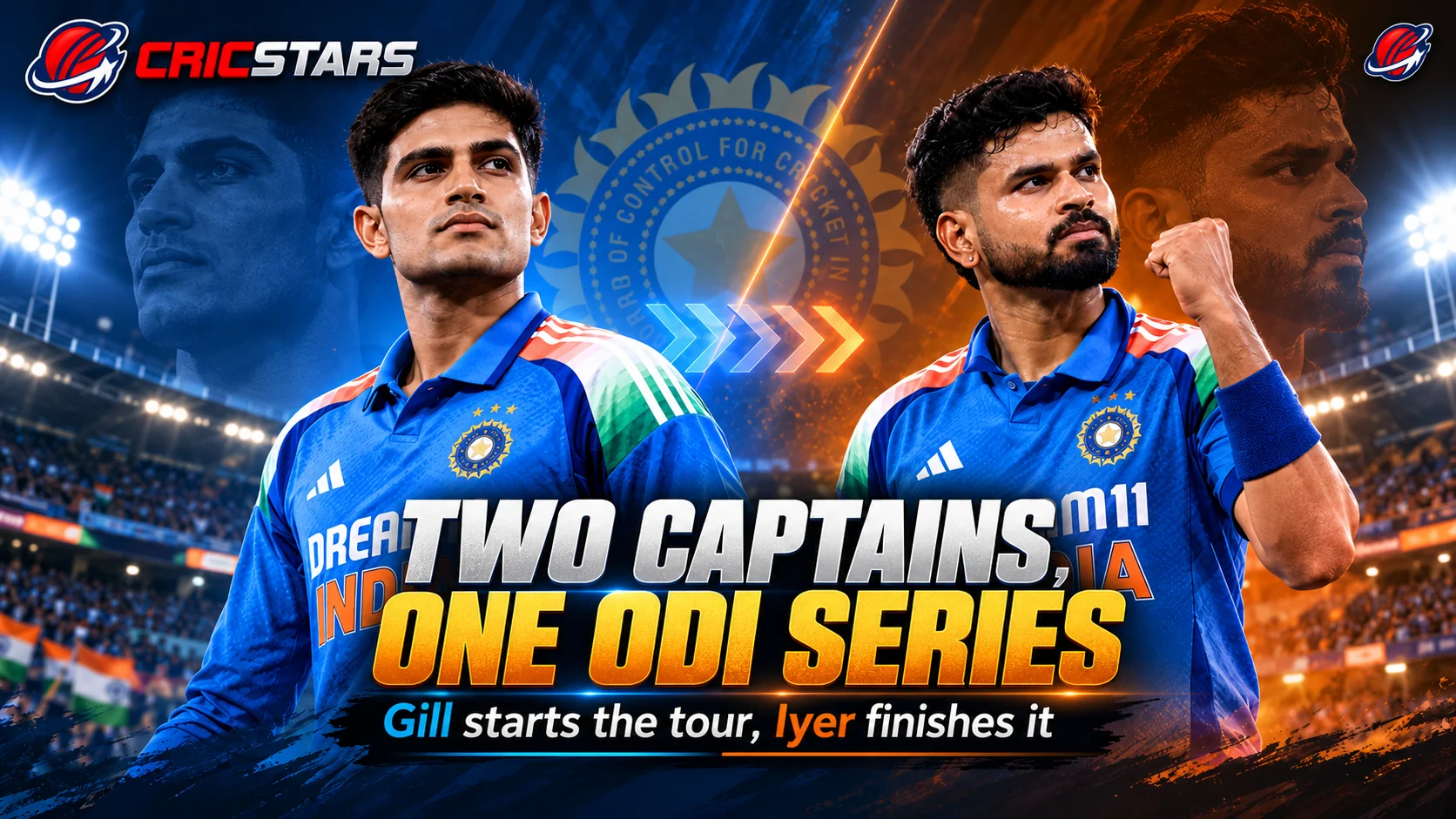
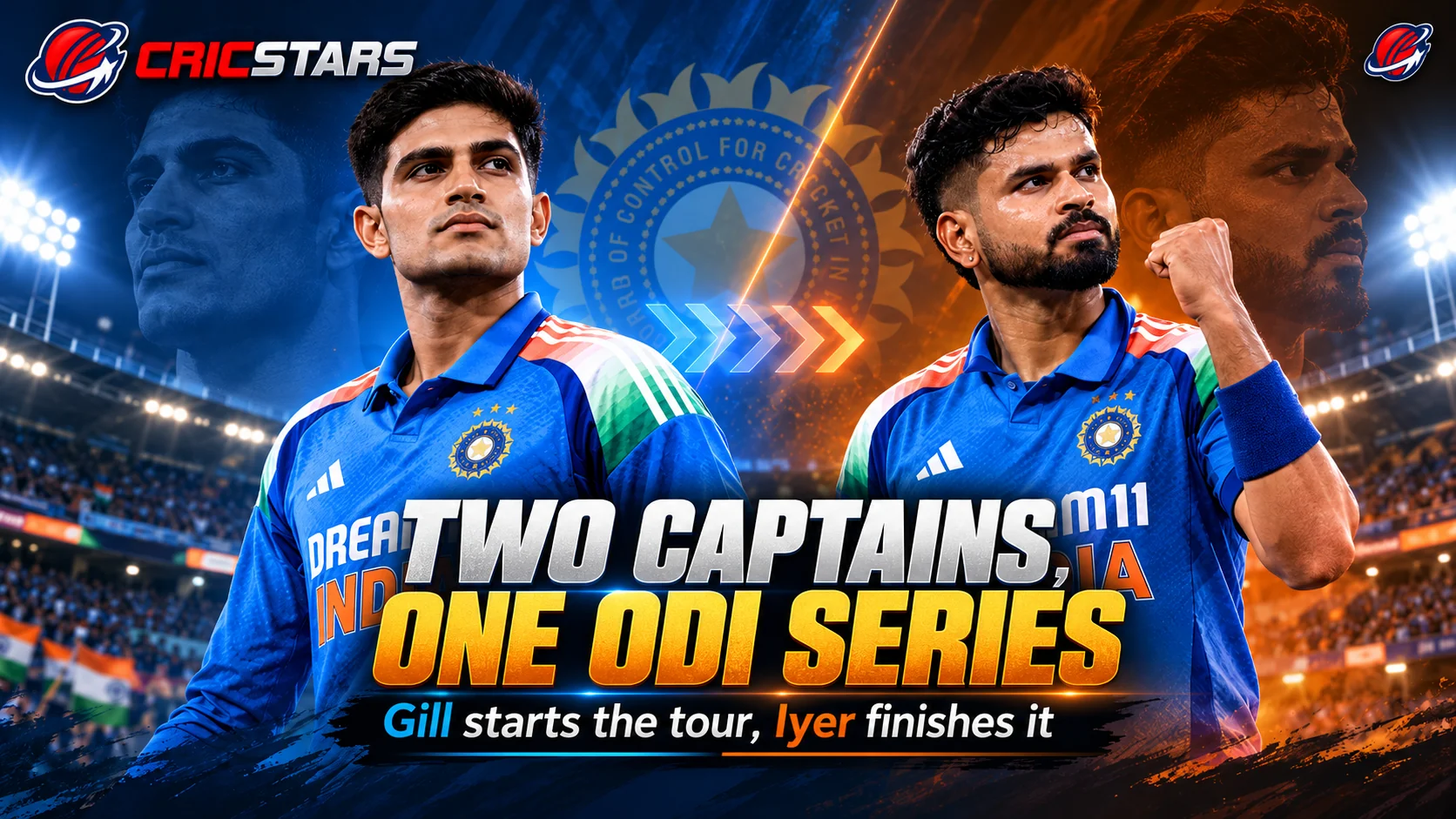
India have confirmed an unusual captaincy arrangement for their five-match ODI series against New Zealand, with Shubman Gill leading the opening three matches before Shreyas Iyer takes charge of the final two.
The Board of Control for Cricket in India (BCCI) announced the two squads on 16 October 2026, placing Iyer in the vice-captain's role for the first three games and naming Ishan Kishan as his deputy for the final two. Rohit Sharma and Virat Kohli will remain available throughout the series, providing experience as India change captains midway through the tour.
The decision comes less than a year before the 2027 ODI World Cup and just weeks before India begin another important Test assignment. It also raises an interesting question: how will a team built around Gill's leadership respond when Iyer takes control with the series potentially still undecided?
Why India Are Changing Captains Midway Through the Series
India's announcement confirms the leadership arrangement but does not provide a detailed official explanation for the change.
The tour schedule, however, offers a strong indication of the thinking behind it. Gill is also India's Test captain, and the first Test in Wellington begins on 19 November, only four days after the fifth ODI at Mount Maunganui.
Under the announced plan, Gill will complete the third ODI in Hamilton on 10 November before leaving the one-day squad. KL Rahul, Anshul Kamboj and Prasidh Krishna are also included in the Test squad but will not feature in the final two ODIs.
That gives these players additional time to prepare for the longest format, where adjusting to the red ball, longer bowling spells and different batting conditions becomes important. It is a reasonable explanation for the selection changes, although the BCCI has not explicitly described workload management as the reason for splitting the captaincy.
India are not alone in making changes during the series. New Zealand have also selected different squads for the opening three and final two ODIs, with several Test players leaving the white-ball group early. Mitchell Santner, however, will captain the hosts throughout.
For India, the most important distinction is that Gill has not been removed as ODI captain. Iyer has been given responsibility for two specific matches, rather than being announced as a permanent replacement.
Gill's Leadership Faces an Important New Zealand Challenge
Gill's role in India's future extends well beyond this tour. As a leading top-order batter and the national Test captain, he carries significant responsibility in a team preparing for major competitions across formats.
His ODI leadership has already faced a difficult examination against New Zealand. In January 2026, India lost a three-match home series 2-1, with the visitors claiming their first-ever ODI series victory on Indian soil.
The deciding match in Indore exposed how dangerous New Zealand's middle order can be. Daryl Mitchell scored 137 and Glenn Phillips made 106 as the visitors reached 337 for eight. India fought back through Virat Kohli's 124, but were dismissed for 296 and lost by 41 runs.
That result gives the November series a competitive edge beyond the captaincy announcement. Gill has another opportunity to lead India against opponents who have already beaten them in familiar conditions this year.
New Zealand's grounds present different challenges from those commonly found in India. Wind, changing weather and variations in ground dimensions can influence bowling plans and field placements. Gill's ability to adapt during an innings will be particularly important against a batting group that includes Mitchell, Rachin Ravindra and Glenn Phillips.
The first three ODIs will therefore matter for more than India's position in the series. They offer Gill a chance to respond to the January defeat before he returns to his Test responsibilities.
Shreyas Iyer Has Earned His Opportunity to Lead
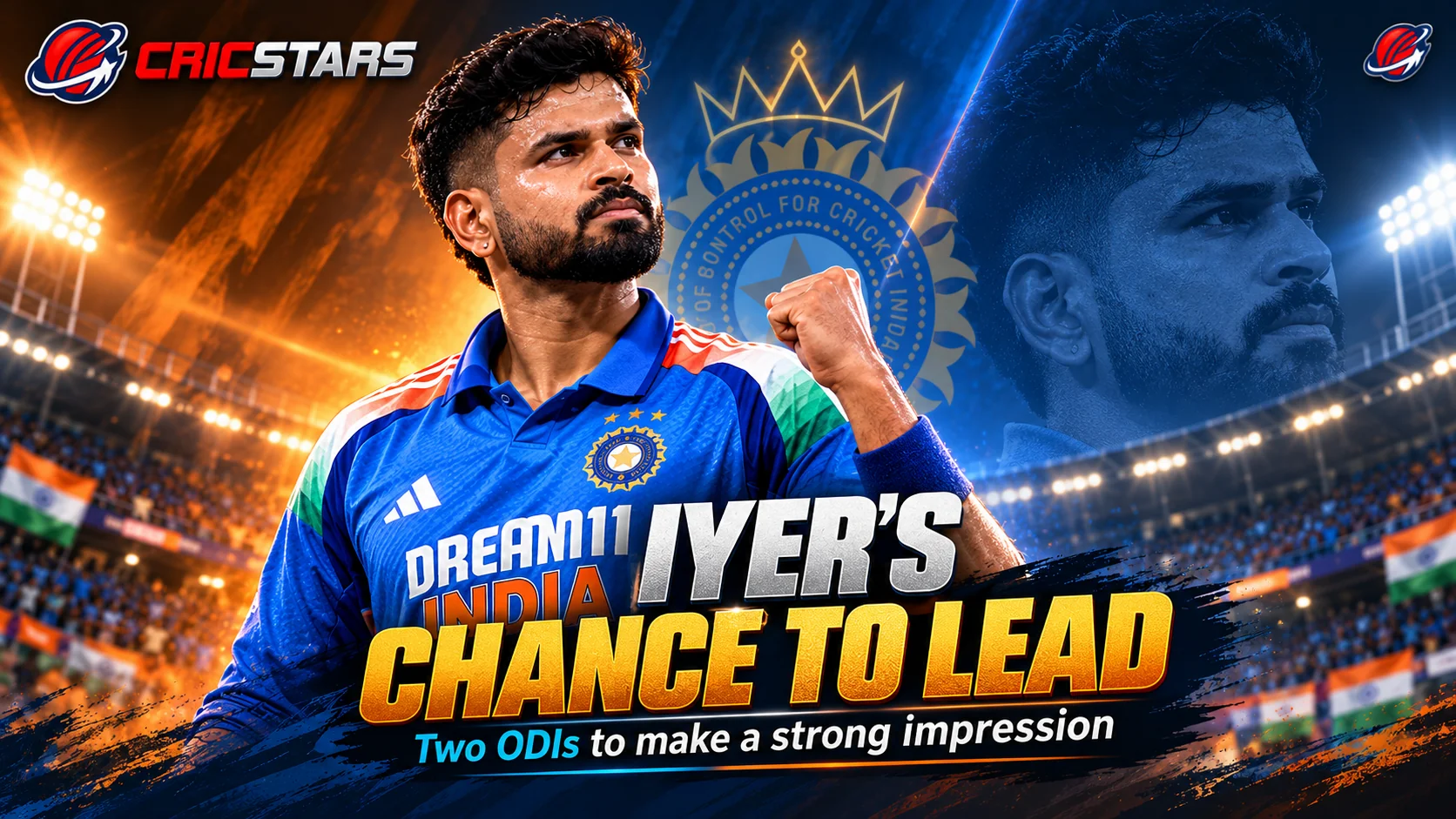
Iyer will inherit the captaincy after the third ODI, but he is far from new to the demands of leading a successful cricket team.
He guided Kolkata Knight Riders to the IPL title in 2024, ending the franchise's ten-year wait for another championship. A year later, he took Punjab Kings to the IPL final, where they finished runners-up to Royal Challengers Bengaluru.
Those campaigns showed his ability to manage different groups of players and make decisions under pressure. International cricket brings its own demands, but Iyer's leadership record gives India a credible alternative when their regular captain is unavailable.
His batting is equally important. Iyer has become a valuable middle-order option because of his ability to attack spin and maintain the scoring rate after the powerplay. Against New Zealand, where partnerships can be tested by disciplined seam bowling, his decisions as a batter may be just as influential as those he makes as captain.
The final two ODIs will also test his ability to manage an attack with different strengths. Mohammed Siraj and Arshdeep Singh offer pace options, while Kuldeep Yadav and Axar Patel give India contrasting spin choices.
Choosing when to attack, when to protect boundaries and how to manage those resources will be central to Iyer's assignment.
Perhaps the biggest challenge will be taking over a series already in progress. The score could be 3-0, 2-1 or 1-2 when Iyer becomes captain. Each situation would demand a different approach, and he will have little time to adjust.
Rohit and Kohli Provide Continuity as India Change the Team
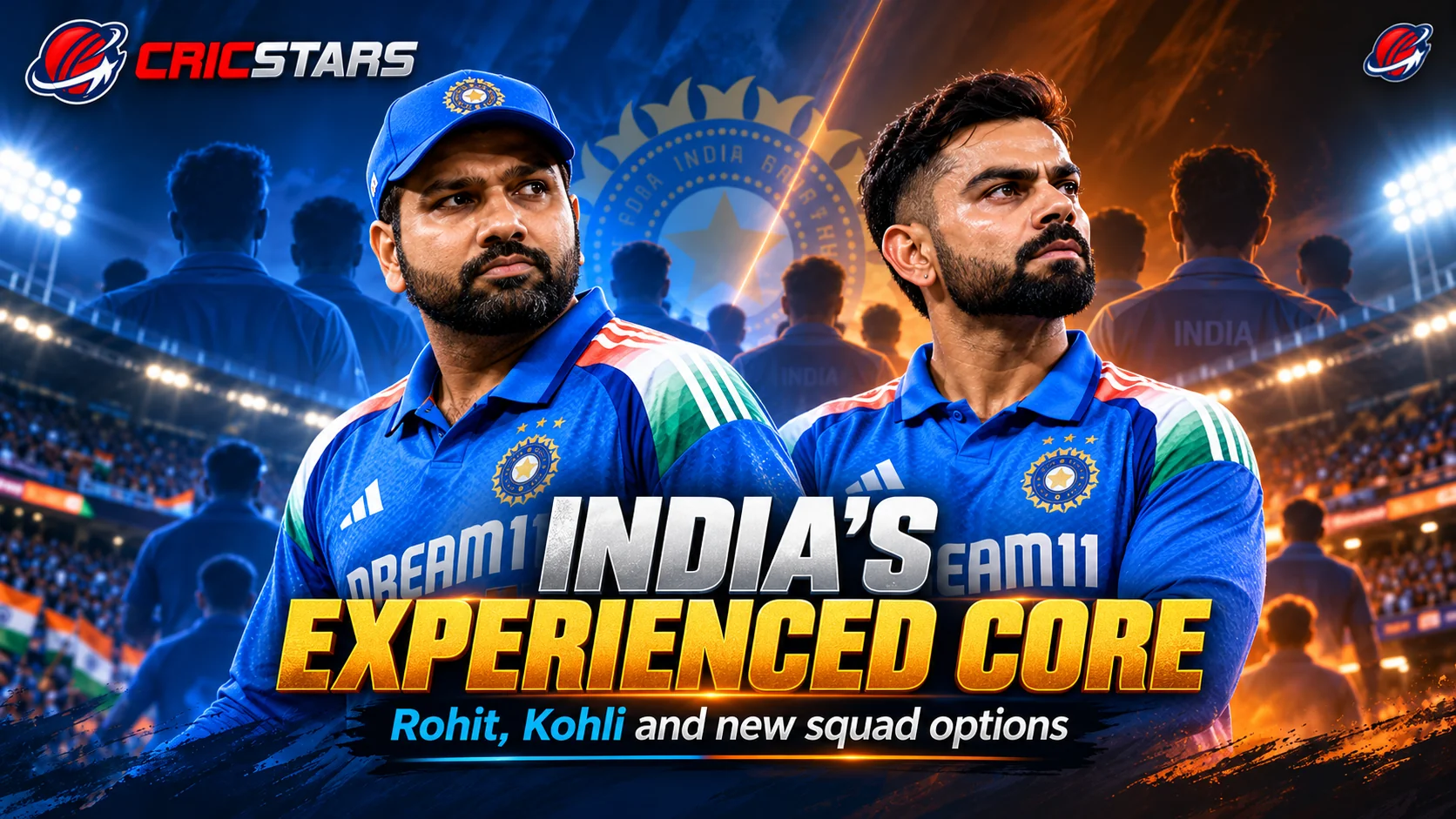
While India will have two captains, some of their most experienced players will remain throughout the ODI series.
Rohit Sharma and Virat Kohli have been included in both squads, alongside players such as Axar Patel, Kuldeep Yadav, Mohammed Siraj, Ruturaj Gaikwad and Nitish Kumar Reddy.
Their presence gives India continuity during the change in leadership. Rohit, who captained India to the 2025 Champions Trophy title, brings experience from major tournaments, while Kohli remains an important figure in the batting order.
Kohli's recent performance against New Zealand also adds relevance to his selection. His century in the January ODI decider was not enough to save India, but it showed that he could still produce a major innings against this opposition.
There are changes elsewhere in the squad. Tilak Varma joins the group for the fourth and fifth matches, while Kumar Kushagra, Auqib Nabi and Yash Thakur have also been selected.
Kishan's promotion to vice-captain is another development worth watching. With Rahul absent from the final two ODIs, India will have a different wicketkeeping combination and a younger player supporting Iyer in leadership discussions.
These changes create opportunities, but selection alone does not guarantee playing time. Much will depend on the balance India want for each match and the conditions they encounter.
India vs New Zealand 2026: ODI Fixtures and Captains
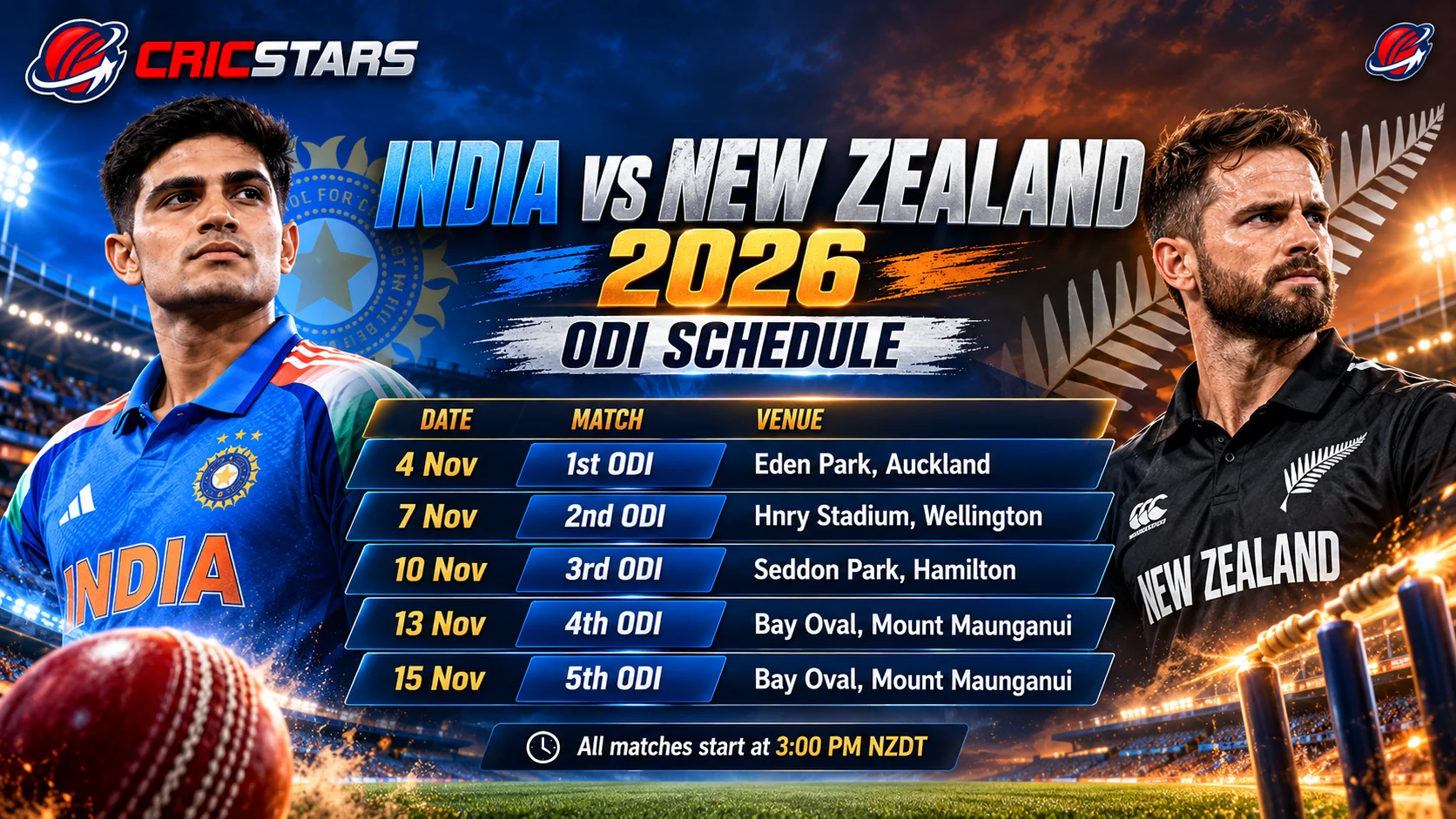
India's five-match ODI series begins at Eden Park in Auckland on 4 November and finishes with two matches at Bay Oval in Mount Maunganui.
| Match | Date | Venue | NZDT | India captain |
|---|---|---|---|---|
| 1st ODI | 4 November | Eden Park, Auckland | 3:00 PM | Shubman Gill |
| 2nd ODI | 7 November | Hnry Stadium, Wellington | 3:00 PM | Shubman Gill |
| 3rd ODI | 10 November | Seddon Park, Hamilton | 3:00 PM | Shubman Gill |
| 4th ODI | 13 November | Bay Oval, Mount Maunganui | 3:00 PM | Shreyas Iyer |
| 5th ODI | 15 November | Bay Oval, Mount Maunganui | 3:00 PM | Shreyas Iyer |
All start times are in New Zealand Daylight Time. In India, the matches begin at 7:30 AM IST.
The teams will then turn their attention to the two-match Test series, beginning at the Basin Reserve in Wellington on 19 November. The second Test starts at Hagley Oval in Christchurch on 27 November.
What India's Decision Means Before the 2027 World Cup
The 2027 ODI World Cup, to be hosted by South Africa, Zimbabwe and Namibia, is an important longer-term target for both teams. With less than a year remaining before the tournament, selectors will want a clearer understanding of their strongest players and combinations.
India's decision to use Gill and Iyer during the same series provides another opportunity to assess their leadership options. It does not necessarily mean the selectors are considering a permanent division of the ODI captaincy.
There is also a practical difference between winning a bilateral series and preparing a side for a World Cup. India must do both. Giving players opportunities can improve squad depth, but frequent changes can also make it harder for a team to build settled partnerships and defined roles.
That balance will be important during the final two ODIs. Iyer could inherit a winning side with momentum behind it, or a team needing to recover from difficult results. In either case, his decisions will offer useful evidence of how India cope when Gill is not available.
New Zealand will provide a demanding test. Their January ODI series victory in India showed that they can challenge India's established players, while the November matches will be played in conditions the hosts know well.
The immediate priority remains the series result. India must begin well under Gill, manage their planned squad changes and maintain their standards when Iyer takes charge.
The clearest measure of this unusual arrangement will not be the number of captains India use. It will be whether they can make the change without losing the performances and partnerships needed to beat New Zealand.
Sources consulted: Board of Control for Cricket in India (16 October 2026 squad announcement); New Zealand Cricket (2026–27 international schedule and ODI squad announcement); International Cricket Council (January 2026 ODI series report); Reuters (16 October 2026 India squad report); Indian Premier League (2024 final report); Royal Challengers Bengaluru (2025 IPL final report).